triphub

TRIPHUB.online

This man built a plane for his family in his garden


Posted on October 22, 2022 by TripHub.online

Kerala Man Builds His Own Airplane To Travel Around Europe With His Family


Thamarakshan built a four-seater aircraft model Sling TSI and named it G-Diya

In today’s time when innovation and technology, along with determination and sincerity, meet – the final result is just amazing. During the covid-19 pandemic, all of us were in the zone where innovation and creativity peaked due to unprecedented lockdowns. Some took creativity to a higher notch. Here’s one example – Ashok Alisheril Thamarakshan, a man from Kerala, built a plan so he and his family can travel around Europe.

Thamarakshan built a four-seater aircraft model Sling TSI and named it G-Diya. It works on a single engine. According to media reports, the couple has two daughters, Tara, six and Diya, three. The aircraft is named after the younger daughter.

At present, he lives in London, UK. The project was completed in 1,5000 hours and the total cost of production was 1,40,000 euros (Rs 1,14,00,830 approx). His wife Abhilasha Dubey and he started to save money from the first covid-19 lockdown. Thamarakshan has a pilot license and he worked on the aircraft for the last couple of years in his garden shed.

According to media reports, Thamarakshan said that initially, he used to rent two-seater aircraft for the trips after he got his pilot licence in 2018. But later, he realised that he required a four-seater aircraft to take his family along with him on trips. He mentioned that these four-seaters are rare and whatever he found, those were old. This encouraged him to further research on the creation of a four-seater aircraft which he built later during the covid-19 lockdown.

In order to build his plane, Thamarakshan had to attend the launch party of a new aircraft Sling TSI of Sling Aircraft in Johannesburg. The event took place in 2018. This gave him ideas and takeaways on how to build a plane from the scratch.

According to Thamarakshan, Europe and US are completely fine with home-built aircraft.


0

Ritz-Carlton’s $6,400-a-week luxury super yacht cruise has finally set sail


Posted on October 21, 2022 by TripHub.online

221020093518-02-ritz-carltons-luxury-superyacht-cruise-extra-hp-video.jpg

It has been three and a half years since Ritz-Carlton’s first superyacht cruise was originally scheduled to sail. However, Evrima officially set sail on its seven-night maiden cruise on October 15, 2022, from Barcelona in Spain to Nice in France.

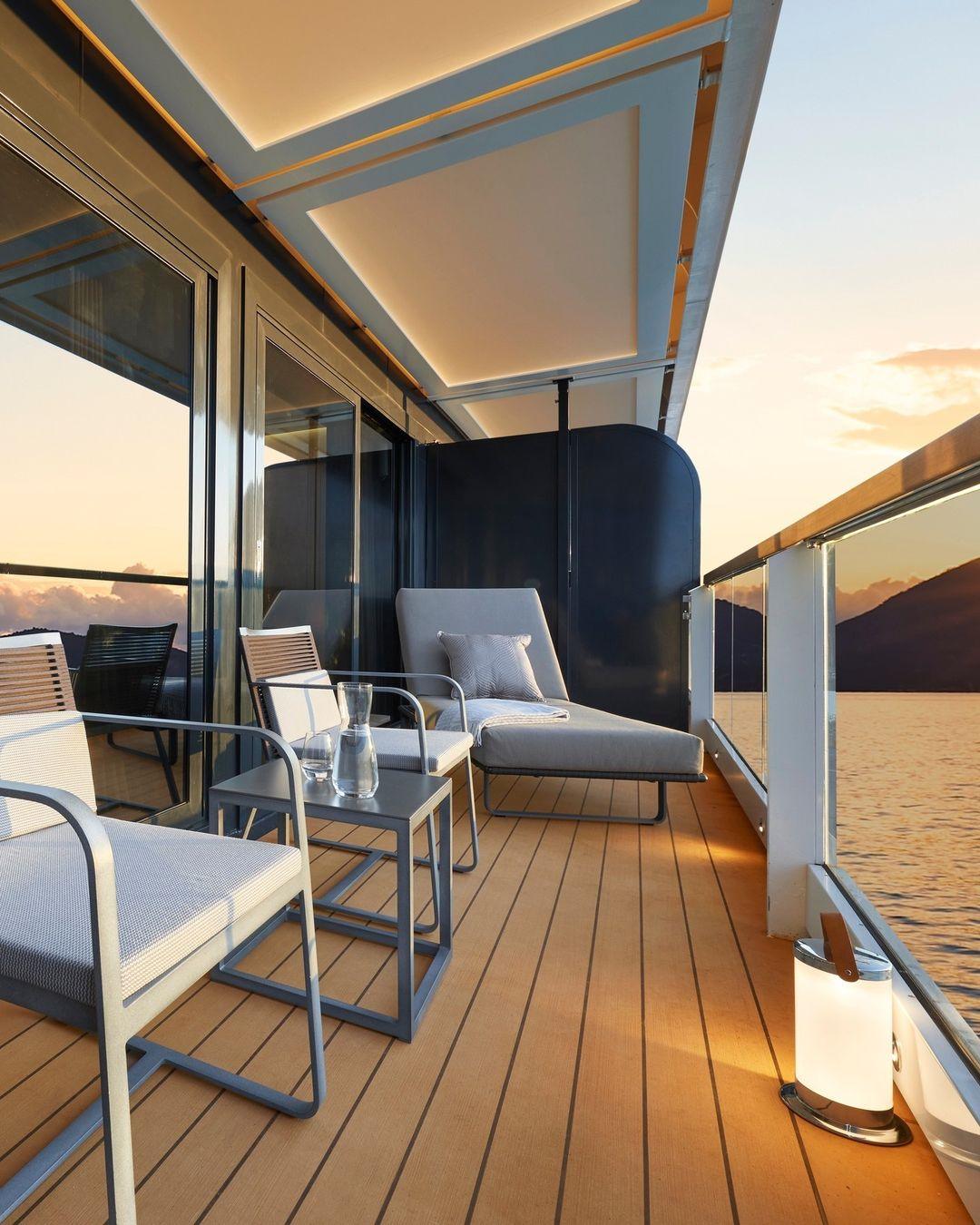
Private terrace on Ritz-Carlton Yacht Collection

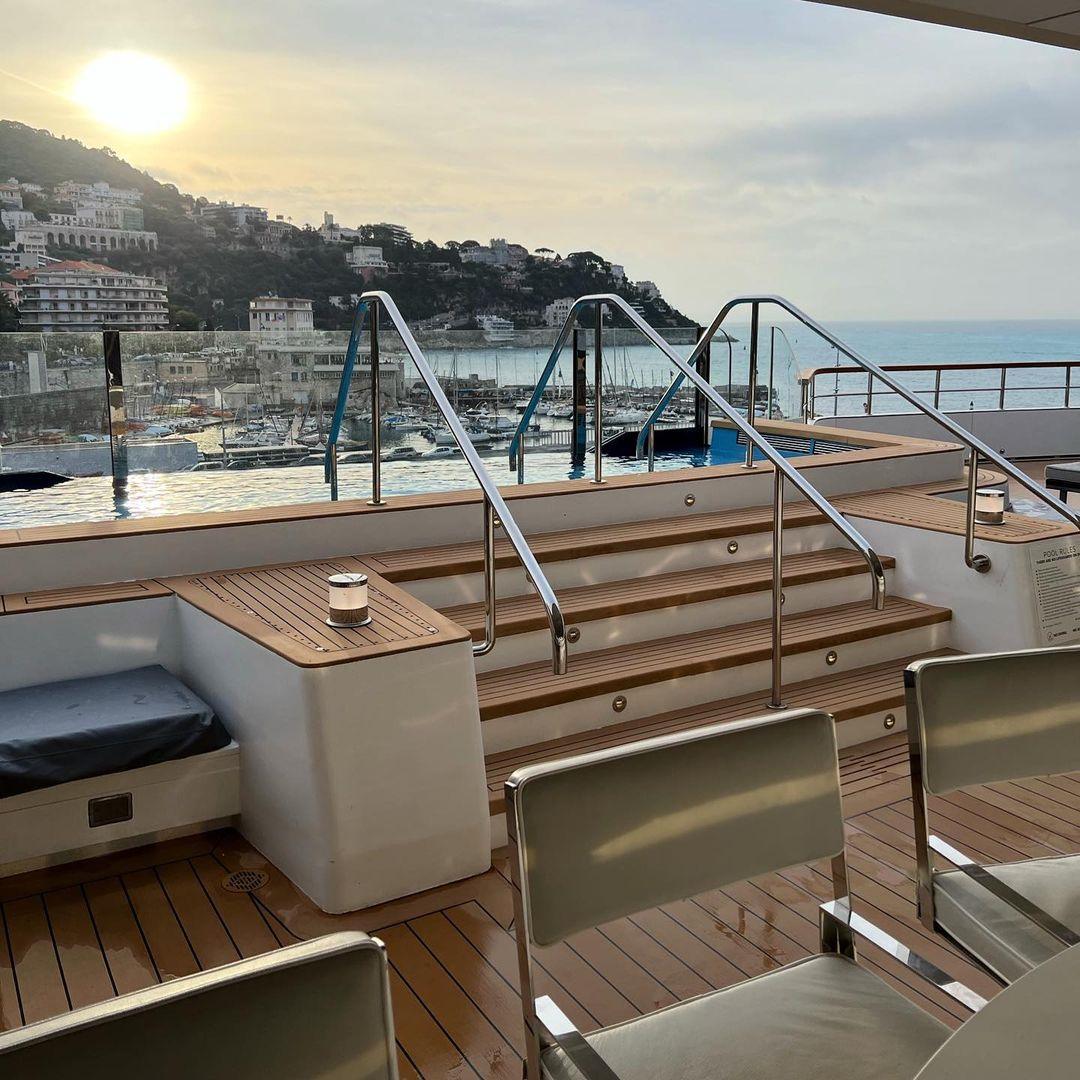
Evrima is the first of three custom-built yachts from the Ritz-Carlton Yacht Collection. Measuring 190 meters (623 feet), the superyacht can accommodate 298 passengers in 149 suites. Each suite features a private terrace, an infinity pool, and floor-to-ceiling windows. The yacht has a wine vault, a nightclub and a Ritz-Carlton Spa, as well as its own “marina.”

How much for a one-week Mediterranean cruise?

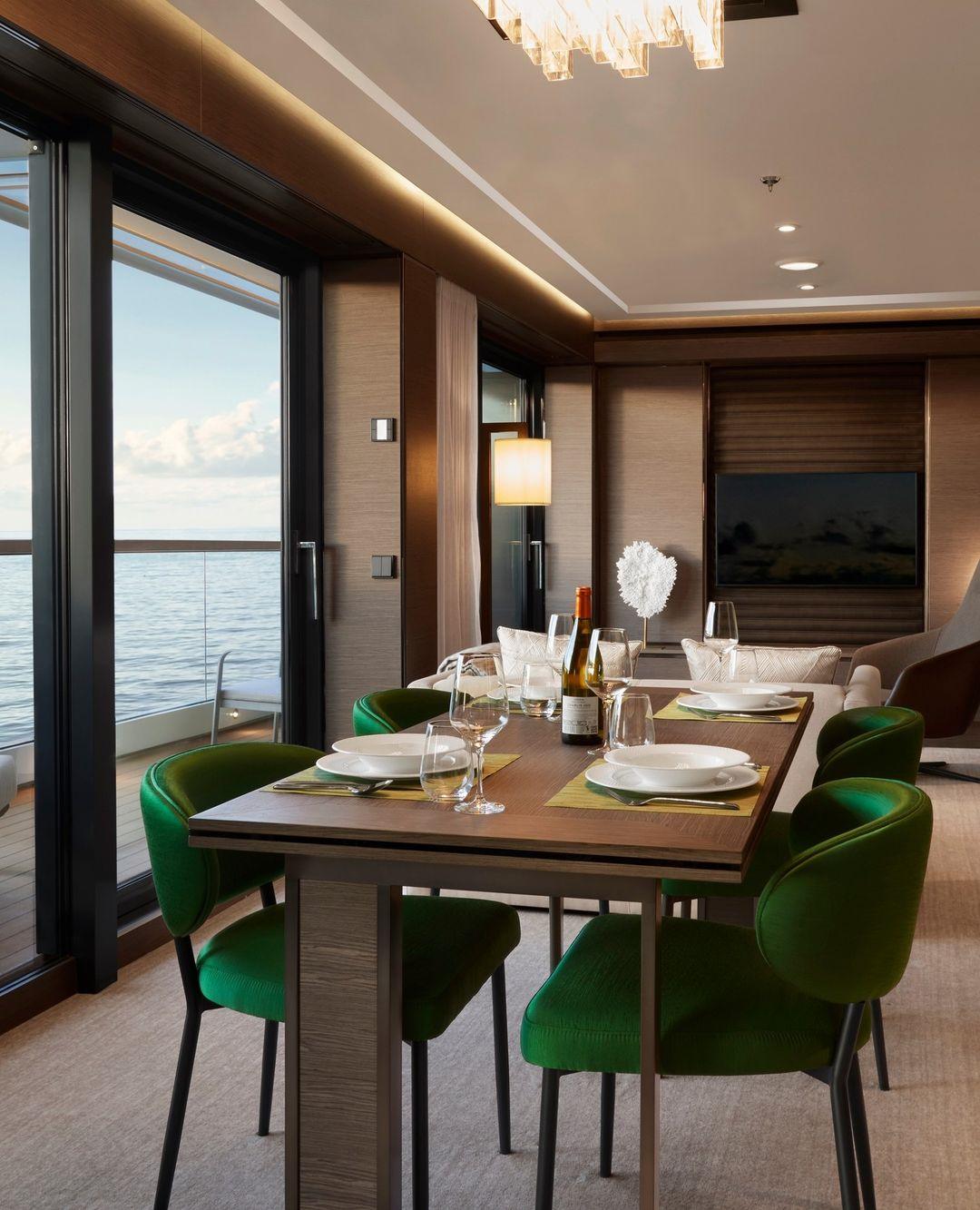
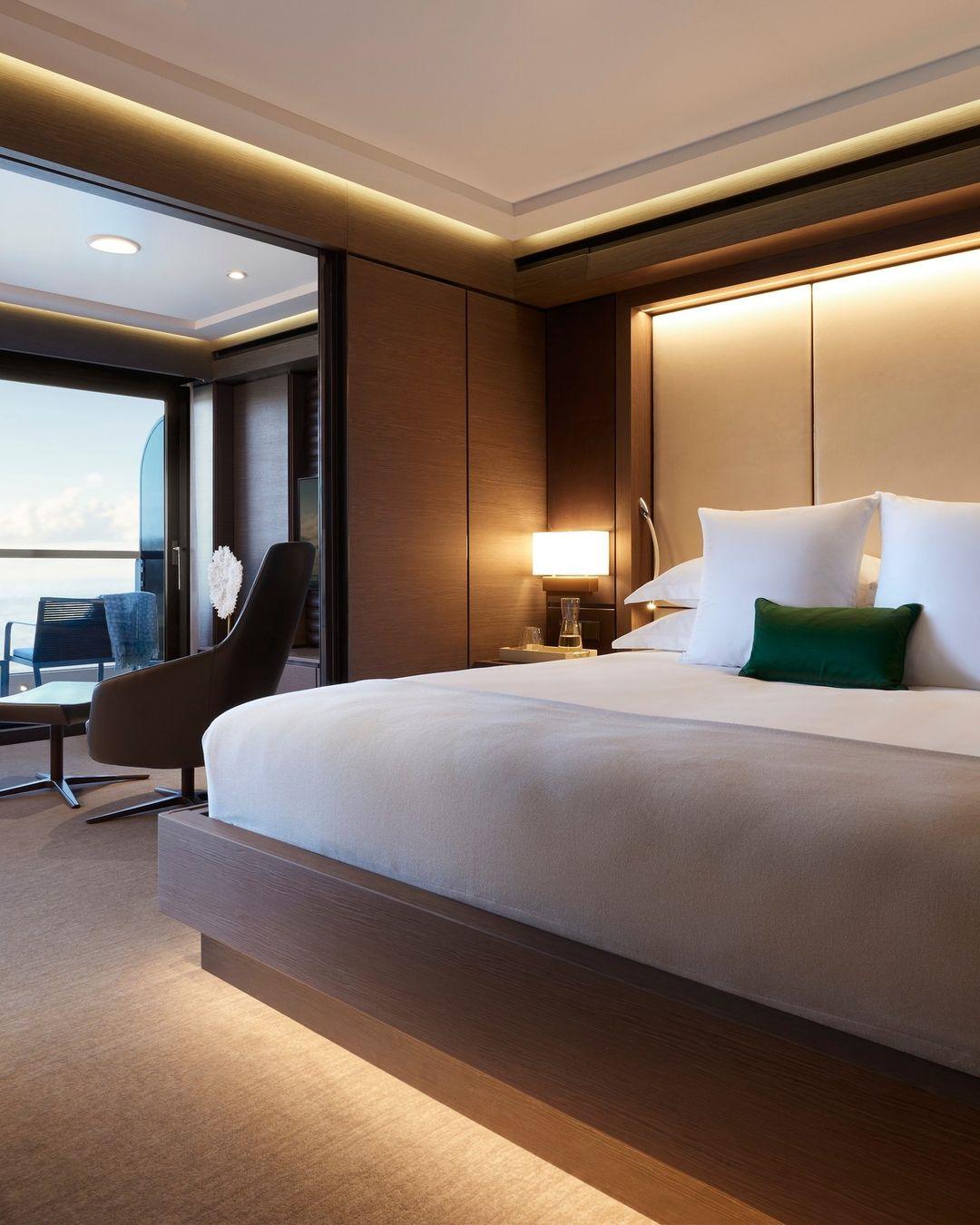
One week, Mediterranean cruises start at $6,400 per person, while Caribbean voyages start at $5,100 per person. Meanwhile, accommodation options vary, with everything from standard cabins, to two-story “loft-style” apartments. Moreover, for those who want the very best, Evrima features a 1,091 square foot “owner’s suite” with its own private hot tub.

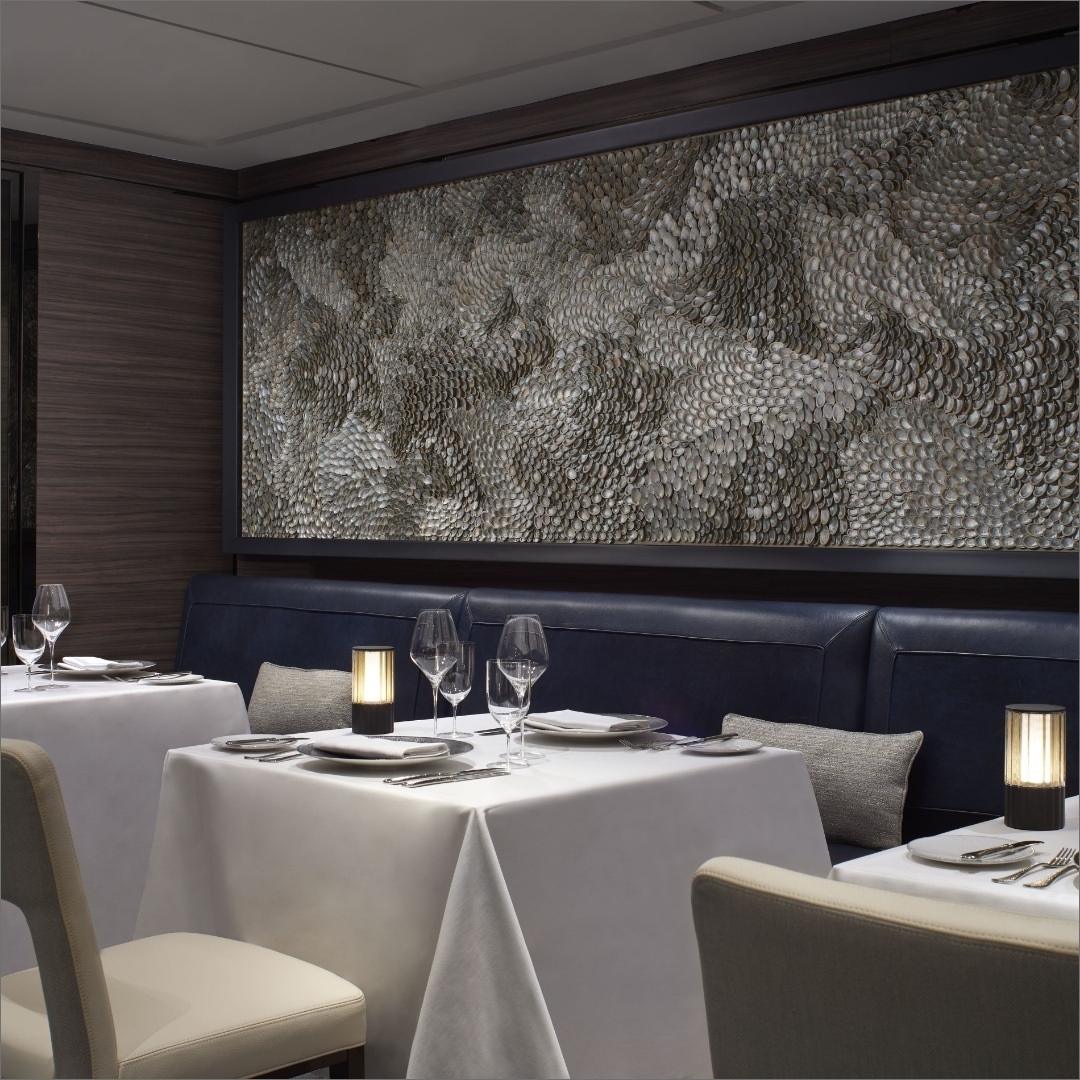
DiningWhichever accommodation guests choose on these luxury cruises, they can expect “service at a gold standard.” In fact, Ritz-Carlton Yacht Collection claims among the highest staff and guest ratios on a cruise. Moreover, the yachts offer fine dining, onboard entertainment and complimentary water sports for active guests.

Meanwhile, when it comes to families, the yacht also features a dedicated onboard children’s facility with a fun-packed program for children from four to 12. Naturally, this gives parents the chance to relax on deck or head to the onboard spa.

Ritz-Carlton Yacht Collection destinations

Suite Ritz-Carlton Yacht Collection

The new Ritz-Carlton superyacht Evrima (which means discovery in Greek) will set sail to a variety of popular destinations. These include the Mediterranean, the Caribbean, Central America and South America, with most cruises ranging from seven to 10 nights.

Eventually, Evrima will be joined by two other superyachts, Ilma and Luminara. In fact, both are currently under construction at Chantiers de l’Atlantique shipyard in Saint-Nazaire, France.

Restaurant

Originally, Ritz-Carlton planned its move into the superyacht world in 2107, calling its venture “a hybrid between luxury cruising and yachting.” However, the launch was rescheduled a number of times due to supply chain issues and the COVID-19 pandemic.


Superyachts available for private charter

Besides its set itineraries, each of the Ritz-Carlton superyachts will also be available for private charter. So far, the company has not revealed the price of a private charter, so they are likely to only be available for those with plenty of money.

Pool
Meanwhile, Chris Cabaldon, Senior Vice President for Luxury Brands at Marriott International also gave a statement about the launch of the superyacht.

For those with the wherewithal, The Ritz-Carlton Yacht Collection makes a fine addition to the many cruise lines in the world.


0

Limone sul Garda, Italy village with a health ‘elixir’


Posted on October 20, 2022 by TripHub.online

Triphub

Limone sul Garda, Italy's village with a health 'elixir' | CNN Travel

How far would you travel for the “elixir” to a long life at optimal health? A small village in Italy’s northern Lombardy region is said to have the secret to wellness.

Limone sul Garda has less than 1,000 residents and is a quaint fishing village. It’s also the most northern location in the world where lemons are grown naturally. The climate is extremely mild even though it’s located at the bottom of the Alps.

The village’s secret to long life

Residents of Limone sul Garda can reportedly eat whatever they want without having to think about gaining weight or developing health issues. Their digestive systems are top tier.

They’re said to have the “Limone gene,” containing a special protein that works to keep blood fluid and destroy lipids.

Under observation

The locals have been under scientific observation for 40 years. Half of the 1,000 residents are born and raised in Limone. Of those half, 60 have the Limone gene.

Scientists are constantly testing the locals as if they’re lab rats. “Since the 1980s we’ve [his family] been giving away our blood for recurrent tests, we’ve almost been bled out entirely,” says shopkeeper Gianni Segala

Segala continued, “They [the scientists] took my blood after each bite [of whipped cream], it was so sweet and greasy I felt nauseous, but even though I ate a lot of it my blood instantly destroyed the fats without assimilating them. By nightfall I almost waited [due to blood loss].”

Scientists’ perspective

Cesare Sirtori is the professor of clinical pharmacology at the Università degli Studi di Milano and leads the team of scientists who first discovered the Limone gene. Sirtori tells CNN Travel that the locals have extremely low HDL cholesterol levels, which is most likely a genetic mutation within the protein carrier.

He is now using his findings to help fight against atherosclerosis, the thickening of the arteries. Sirtori and his team injected the Limone protein into rabbits and found a decrease in blood clots in the rabbits’ arteries.

Can they really eat whatever they want?

“I was just a kid when my blood was first tested, and the doctors come regularly to monitor how our gene is behaving,” says Gianni Segala’s son, Giuliano Segala.

Giuliano says, “The fact that I carry [the gene] gives me a sort of life insurance — I feel more shielded health-wise and confident I won’t have clogged arteries or die of a heart attack when I grow old.”

He eats whatever he wants and doesn’t feel bad about it.

“I never get stomach ache and I eat whatever I feel like. I love cotolette (breaded and fried veal cutlets), fried foods, salamis, and I also love to drink. I sleep like a baby,” Giuliano shares. He does, however, still exercise and doesn’t always overeat.

The unique gene

According to Sirtori, the gene mutation is unique specifically to Limone — not even nearby villages have the gene. It is said that the climate and virgin olive oil are contributing factors to the Limone gene.

What’s natural to them is seen as the ultimate elixir of life for us.


0

Virgin Boeing 747 to launch rocket into space


Posted on October 20, 2022 by TripHub.online

221019093528-01b-uk-spaceport-747-super-tease.jpg

Spaceflight plans to send satellites into space on a Boeing 747-launched Virgin Orbit rocket - Puget Sound Business Journal

(CNN) — At the far southwestern tip of England, dangling into the Atlantic, the remote region of Cornwall rarely feels like the center of the world.

But recently locals have been feeling tantalizingly close as they’ve watched a very special plane fly low overhead, taking off from the runway at little Newquay Airport — the 29th biggest airport in the UK — and circling the skies above the coast before touching back down.

This isn’t just any plane. Nor is it a normal Boeing 747, as it appears from the ground. In fact, it’s the “Queen of the Skies” repurposed for the space race, making trial flights before it takes part in the United Kingdom’s first orbital space launch next month. And it’ll be taking off from Spaceport Cornwall, which shares the airport’s 1.7-mile regular runway.

Marc Andrew, from nearby Newquay, traveled to the spaceport after work to see the aircraft land this week.

“It was amazing to watch, and will be a nice bit of history to tell my little boy when he’s older,” he told CNN. He is now preparing to return for the November launch.

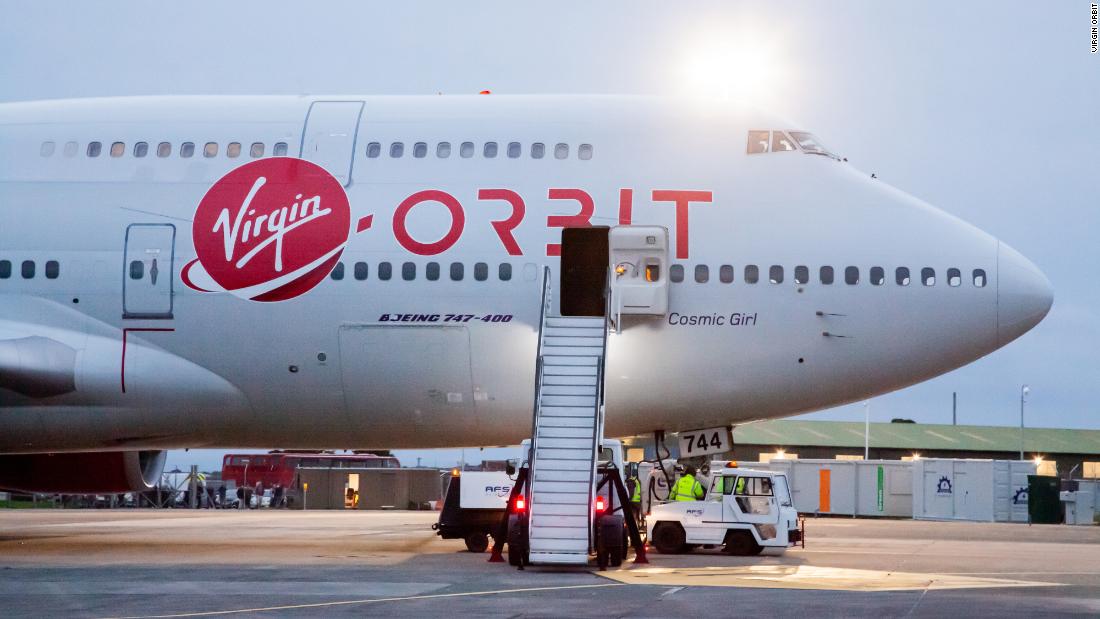
Cosmic Girl, as the plane has been named, is the vessel for Virgin Orbit’s bid to launch seven satellites into space.

A former passenger jumbo jet in service with Virgin Atlantic until 2015, it has been modified to carry LauncherOne, a California-made rocket which will go into the Earth’s orbitCosmic Girl, a former Virgin Atlantic 747, will launch from Newquay, U.K.

Virgin Orbit

Next month, Cosmic Girl will take off from Newquay’s clifftop runway with LauncherOne under its wing — and once the 747 hits 34,000 feet, it’ll release the rocket.

Inside will be seven payloads, or satellites, which will start circling the planet in low Earth orbit.

A trial last year saw the rocket — released from under the 747’s left wing — traveling at up to 17,000 miles an hour as it zoomed into space.


A test flight for locals


Using a 747 for a horizontal launch enables a “broader range of orbits than would be possible from a traditional ground-launched system,” Virgin Orbit wrote in a statement.

The event will be the first orbital space launch for the UK and the first international launch for Virgin Orbit, according to the company. It’ll also be Europe’s first satellite launch, according to Ian Annett, deputy CEO at the UK Space Agency.

LauncherOne completed its first full launch rehearsal in Long Beach, California, on October 2, before being flown to the UK last Friday to meet Cosmic Girl, which arrived in Cornwall on October 11.

Cosmic Girl completed a nearly three-hour test flight around Cornwall and Southwest England on October 14, with Cornwall locals noting it flying low over their gardensRocket LauncherOne has now joined Cosmic Girl at Newquay Spaceport.

Virgin Orbit’s chief pilot, Matthew Stannard, who will fly the 747 for the launch, said: “It feels amazing to bring Cosmic Girl home to the UK We are weeks away now from the first UK launch at Spaceport Cornwall so it’s all very real.”

Melissa Thorpe, head of Spaceport Cornwall, said: “Seeing the infrastructure in place makes our launch ambitions a reality.”

Hoping to see more Cosmic Girls? Virgin Orbit is planning to bring horizontal launches to Australia, Brazil, Japan, Poland and the Republic of Korea.


0

Famous shipwrecks that remain missing — and a few that have been found


Posted on October 19, 2022 by TripHub.online

221019113556-uss-ind-tz-1-super-tease.jpg
1.The Santa Maria (1492)
Santa Maria ship


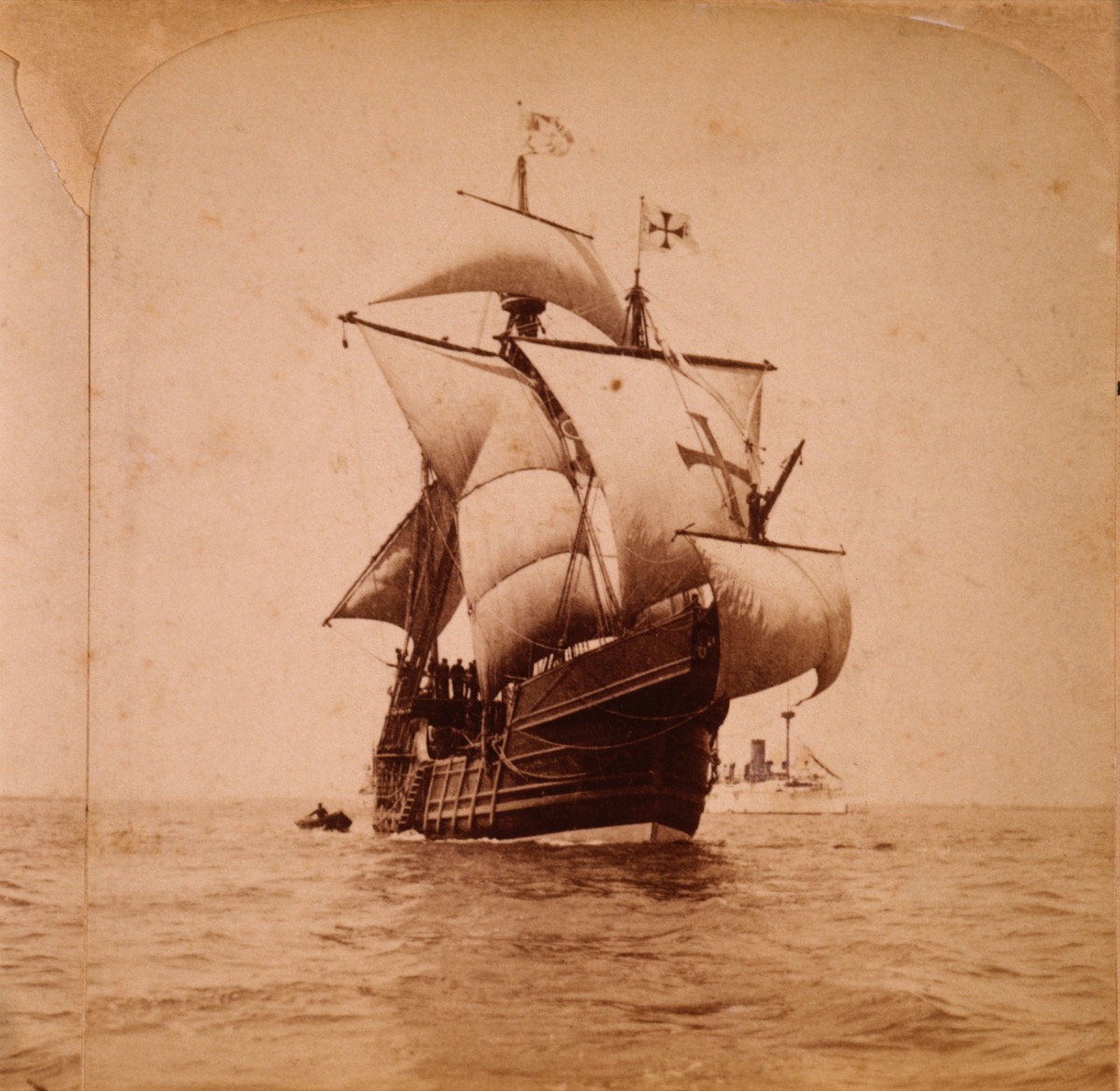
Anyone with a passing knowledge of North American history is familiar with this vessel, one of the trio of ships (along with the Niña and the Pinta) that sailed with Christopher Columbus on his way to the New World. While all three made it safely to the Americas, after declaring the entire place the property of Spain, Columbus set out on a search for gold, spices, and other valuables on the Santa Maria.

The story goes that on Christmas Eve 1492, the explorer went to bed and left a cabin boy in charge of steering the ship. The Santa Maria ran aground in present-day Haiti and Columbus determined it was beyond repair. The ship remains undiscovered, and while an archeological explorer claimed to have found it in 2014, experts concluded it could not have been the famous ship. The vessel and its invaluable historic riches remain lost to the sea.

2.The Endurance (1915)
Endurance ship


Famous explorer Ernest Shackleton’s attempt at an overland crossing of Antarctica came to a tragic end in 1915. In October of that year, his three-masted barquentine, the Endurance, became trapped by dense ice in the Weddell Sea off Antarctica, rendering it immobile. It was eventually crushed by ice and sank in November. The ship’s crew was able to escape to safety by floating on ice packs. Attempts have been made to find “Shackleton’s lost ship,” most recently in February 2019. Unfortunately, the researchers called off the effort in the face of extreme weather. The ship and the history it holds remain lost.

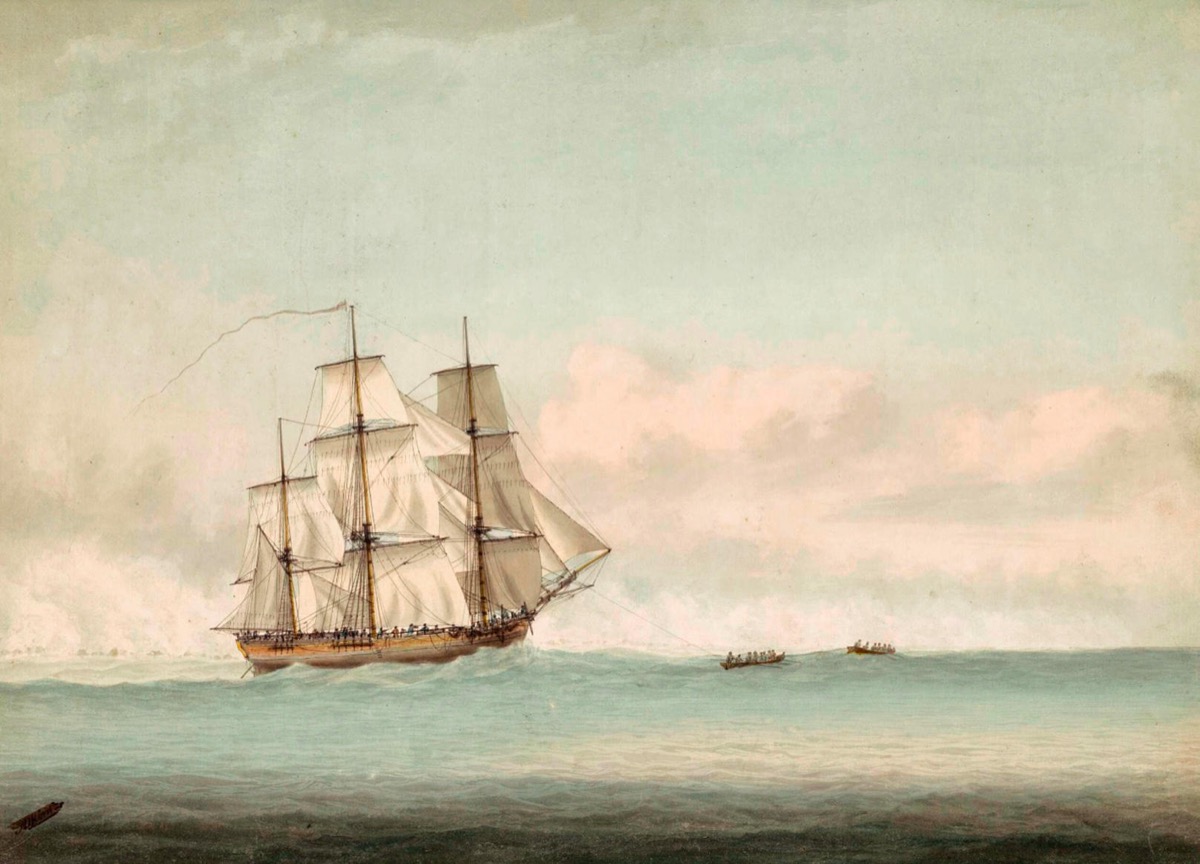
3.The HMS Endeavour (1778)
HMS Endeavour off the coast of New Holland - Samuel Atkins, 1794
Alamy


Another ship that’s earned fame due more to its captain than its contents, this British Royal Navy research vessel was commanded by none other than James Cook during his first voyage of discovery between 1768 and 1771. But the historic vessel did not go down in a dramatic battle or deadly fight with the elements. It was deliberately sunk by the British along with more than a dozen other ships in 1778 to serve as a blockade against the French in the American Revolution. Attempts have been made to recover the Endeavor’s remnants, and while a team has narrowed its search to “one or two sites” in Rhode Island’s Narragansett Bay, the exact location remains elusive.

4.Le Griffon (1679)
Le Griffon ship


This French sailing vessel was the largest ship to cross the Great Lakes, sailing Lake Erie, Lake Huron, and Lake Michigan in August 1679. It landed on an island in Lake Michigan and traded with the local Native Americans, loading up on animal pelts and setting out from present-day Green Bay. However, Le Griffon never reached its destination, and was lost in an intense storm. Some suspected that the fur traders on board may have been involved with the destruction or that Le Griffon had been attacked by people of the First Nations. Whatever the case, the fur-bearing ship remains “the White Whale for Great Lake shipwreck hunters,” according to Atlas Obscura.

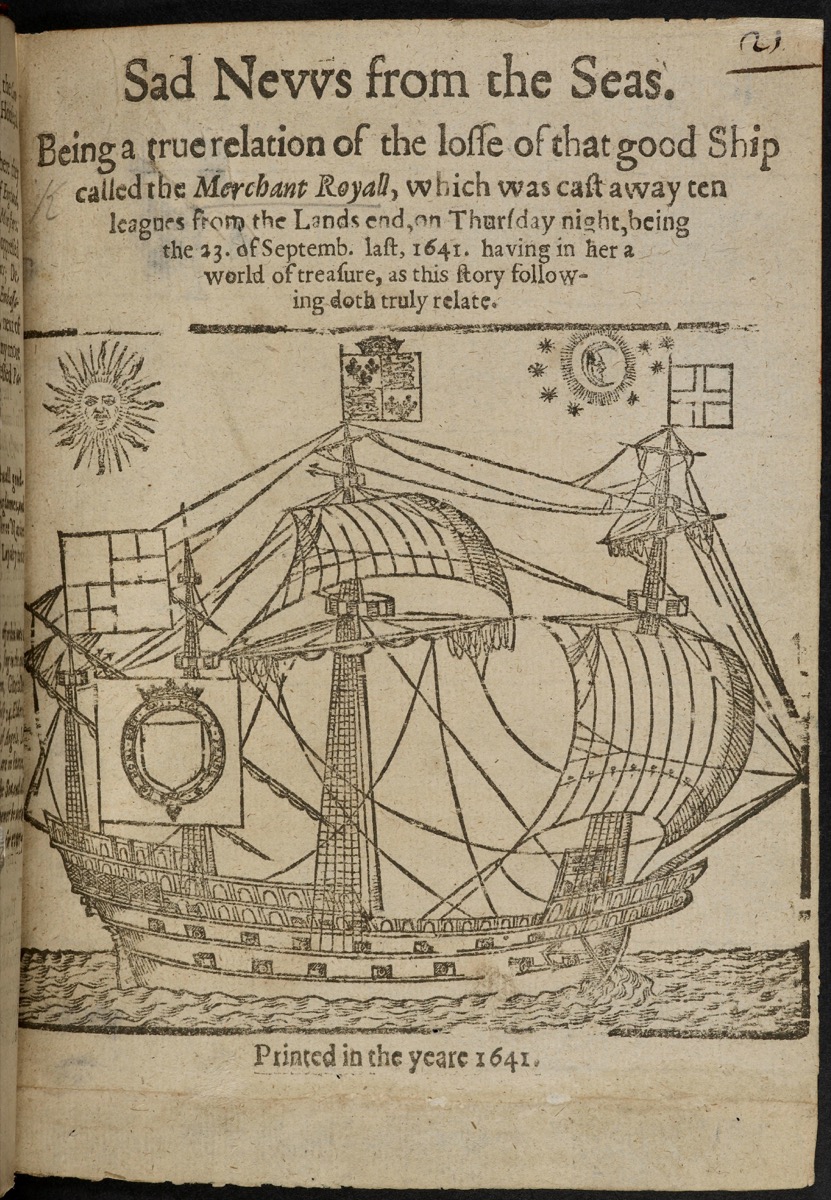
5.The Merchant Royal (1641)
Merchant Royal ship


This English merchant ship traded between England and the Spanish colonies in the West Indies during the late 1630s, and was reputed to be carrying 100,000 pounds of gold and plenty of other valuables when it took its final, fateful trip. On its way back to London, the rundown vessel began to leak. On top of that, the ship’s captain offered to carry additional cargo from a Spanish ship that had caught fire. The added weight and poor condition of the craft, combined with a spate of bad weather, led its pumps to break down and the whole thing to sink off of Land’s End in Cornwall County, England. In 2019, the anchor was found off the coast of the U.K., but the shipwreck—and its estimated $1.5 billion in gold—remains undiscovered.

6.USS Indianapolis (1945)
USS Indianapolis ship


After making a top-secret delivery of the nuclear variety to a U.S. military base in the Northern Mariana Islands during World War II, this heavy cruiser was torpedoed by a Japanese submarine and sunk in 12 minutes. While about 900 of the crew survived the immediate attack, they were left stranded in shark-infested waters. It took days before they were found and rescued by Navy planes, with just 317 men left. It would be known as the worst American naval disaster of World War II; the ship itself has never been recovered.

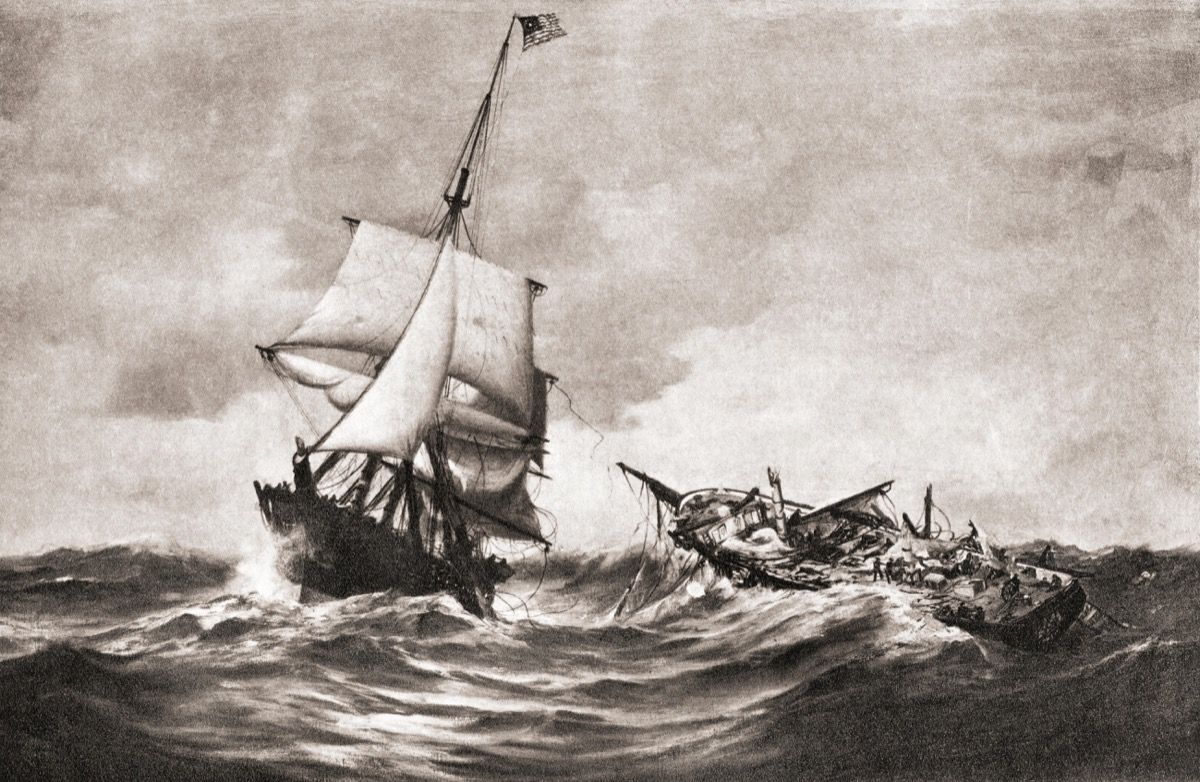
7.The Wasp (1814)
The Wasp ship


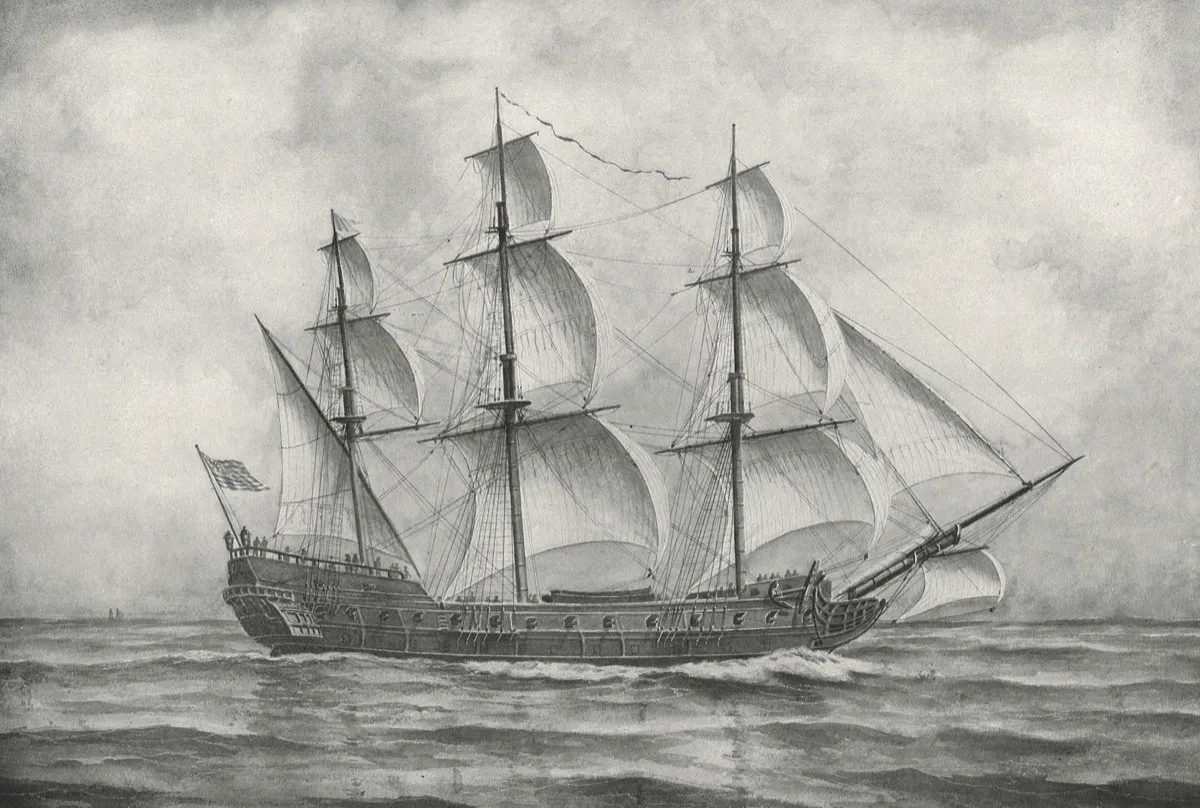
This sloop-of-war was the fifth Wasp in U.S. naval history and was dedicated to taking down British ships during the War of 1812. But in October 1814, on its way to the Caribbean, it disappeared without a trace. Though the Wasp didn’t carry the opulent treasures of many other ships on this list, it did have 173 crew members aboard, none of whom lived to tell the tale of what happened.

8.The Flor de la Mar (1511)
Flor de la Mar


This 400-ton, 16th-century Portuguese sailing ship had an impressive nine-year career, making numerous trips through the Indian Ocean. However, it also had a history of springing leaks and needing repairs. When it was sent out to support the Portuguese conquest of the Malay Sultanate of Malacca, it had been deemed unsafe—but the conquerors needed every ship they could get. On its return voyage in late 1511, the “Flower of the Sea” was caught in a storm off Timia Point in the Kingdom of Aru, Sumatra. General Afonso de Albuquerque and a number of his men survived the wreck, but there were many casualties, including the ship itself, which has yet to be found—and an alleged $2.6 billion in treasure, according to The Daily Beast.

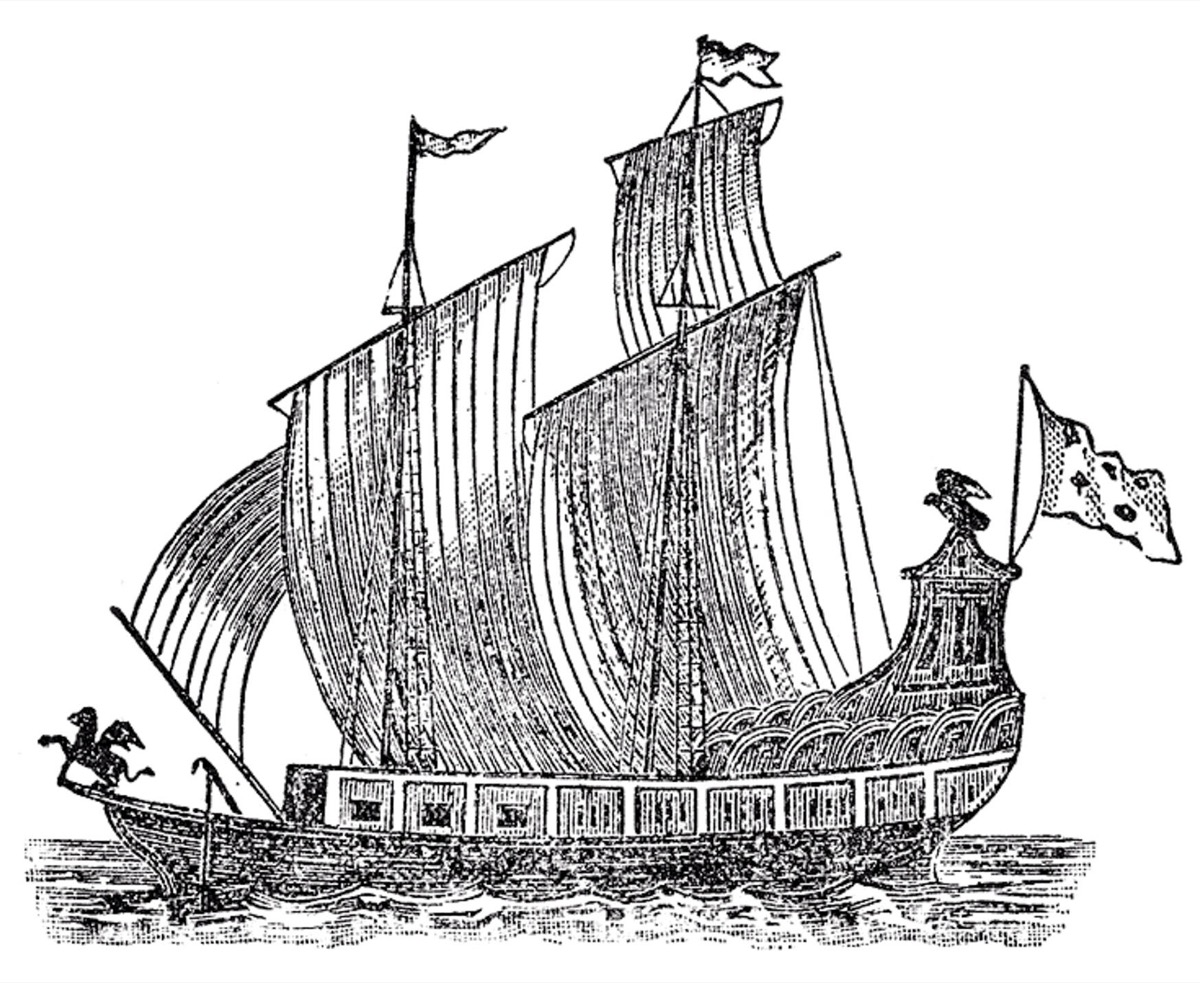
9.The SS Waratah (1909)
SS Waratah


Nicknamed “Australia’s Titanic,” this 500-foot steamship vanished in July 1909 as it was making its way from Durban, South Africa to Cape Town, carrying 211 passengers and crew. It had been launched less than a year earlier and had plenty of opulent accommodations, including 100 first-class cabins, a luxurious music lounge, and delicious eats. The final sighting of the SS Waratah was believed to have occurred on July 28, 1909, during a violent storm. Nothing more was heard from the ship again.

10
The Bonhomme Richard (1779)
The Bonhomme Richard, Flagship of John Paul Jones during the American Revolution


This Continental Navy ship served the American Patriot cause well, reportedly capturing 16 British merchant ships in the first weeks it was put to use under Captain John Paul Jones. But during the brutal Battle of Flamborough Head in late September 1779, it was hammered by the better-armed British ship HMS Serapis. Despite Jones’ perseverance—he allegedly said, “Sir, I have not yet begun to fight!”—the ship sank. The Bonhomme Richard and its artifacts haven’t been seen since (despite occasional glimmers of hope).

11.Las Cinco Chagas (1594)
open water in Portugal
Shutterstock


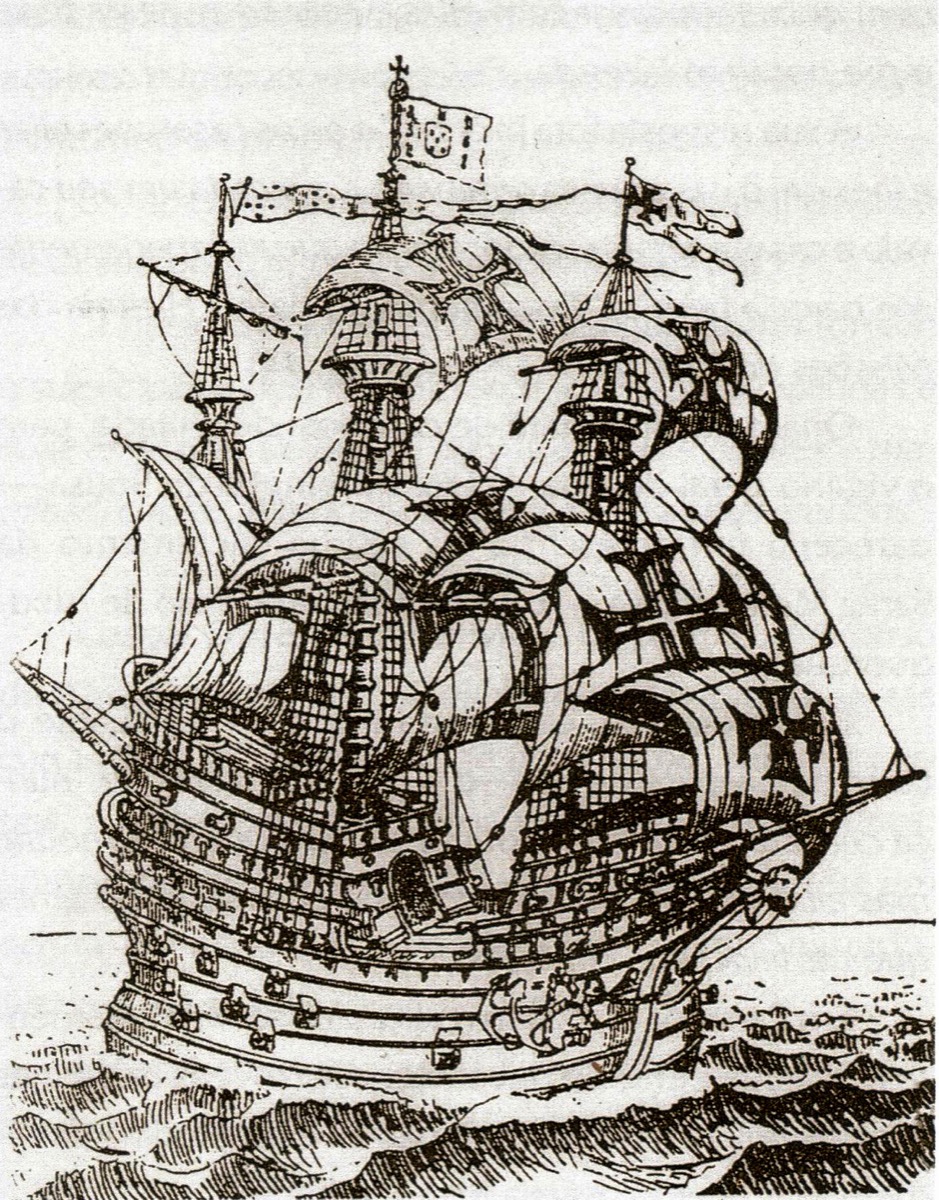
In 1594, this Portuguese carrack was nearing the end of a long trip from India to Portugal, carrying more than 1,100 people. Under the command of Francisco de Mello, the ship was allegedly loaded with “precious stones and all the best of India,” having taken on the cargo from two other ships that had been lost in battle. According to reports, the Chagas was carrying 22 chests of treasure—including diamonds, rubies, and pearls—estimated today to be worth some $1 billion. But as it approached Portugal, the Chagas was attacked by British privateer ships and bombarded nonstop for two days. Finally, it caught fire, and on July 13, 1594, it sank.

12.USS Cyclops (1918)
USS Cyclops in 1913


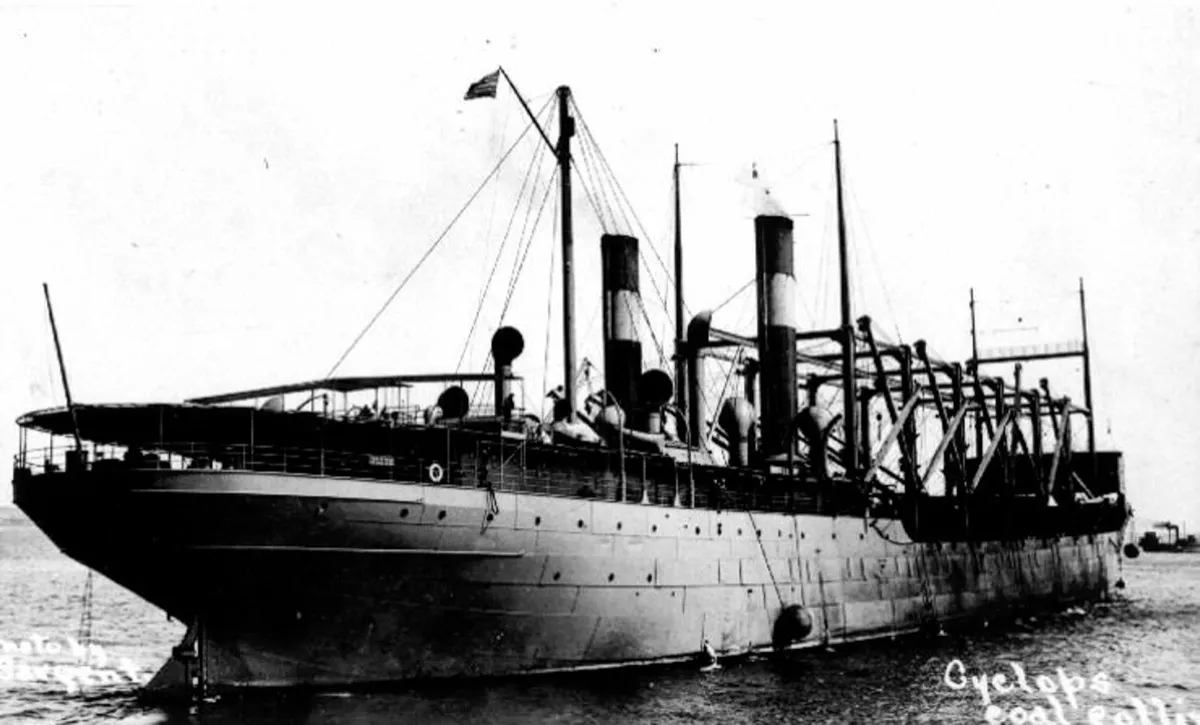
This U.S. Navy ship was one of the more famous victims of the notorious Bermuda Triangle. First launched in May 1910, it was commissioned for World War I, serving along the East Coast of the United States until it was assigned to the Naval Overseas Transportation Service in January 1918. On its way to Baltimore after leaving Rio de Janeiro, the ship disappeared. Little was known about what could have caused the disappearance, but it was believed to have been overloaded, with 11,000 tons of manganese as well as 306 crew members. Some theorize it may have been a German submarine or drunk captain who was to blame. For now, no evidence has surfaced to help solve the mystery. And for more real-life tales that have no endings, check out The 30 Most Fascinating Unsolved Mysteries in America.


0

Secrets from the man behind Hong Kong’s most popular restaurants


Posted on October 18, 2022 by TripHub.online

220927101334-06-geoffrey-wu-hong-kong-toughest-tables-chaat-super-tease.jpg

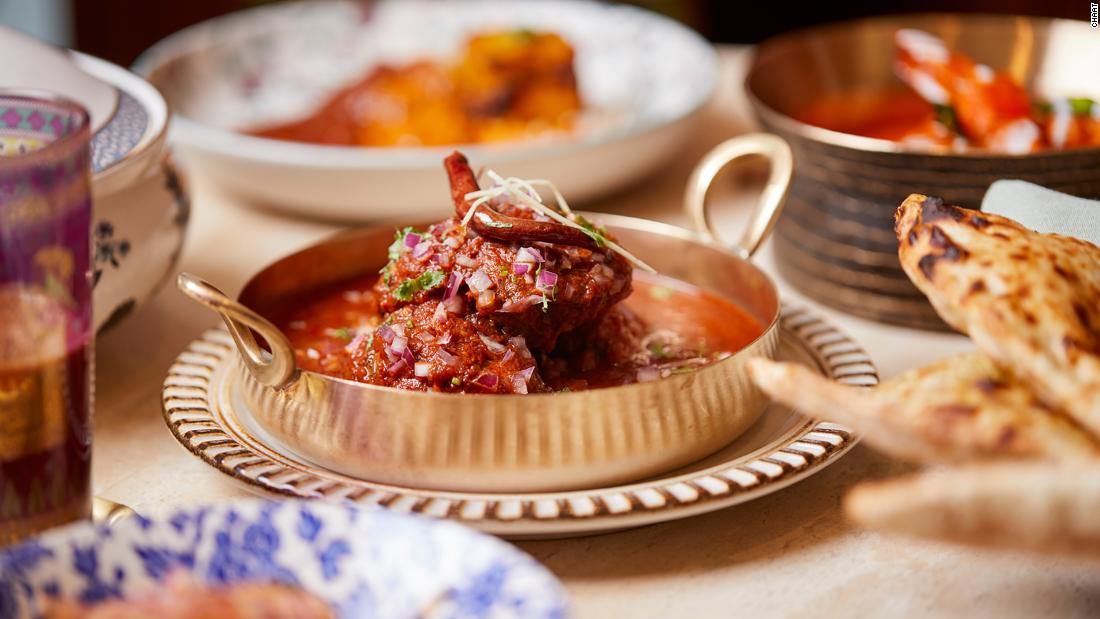
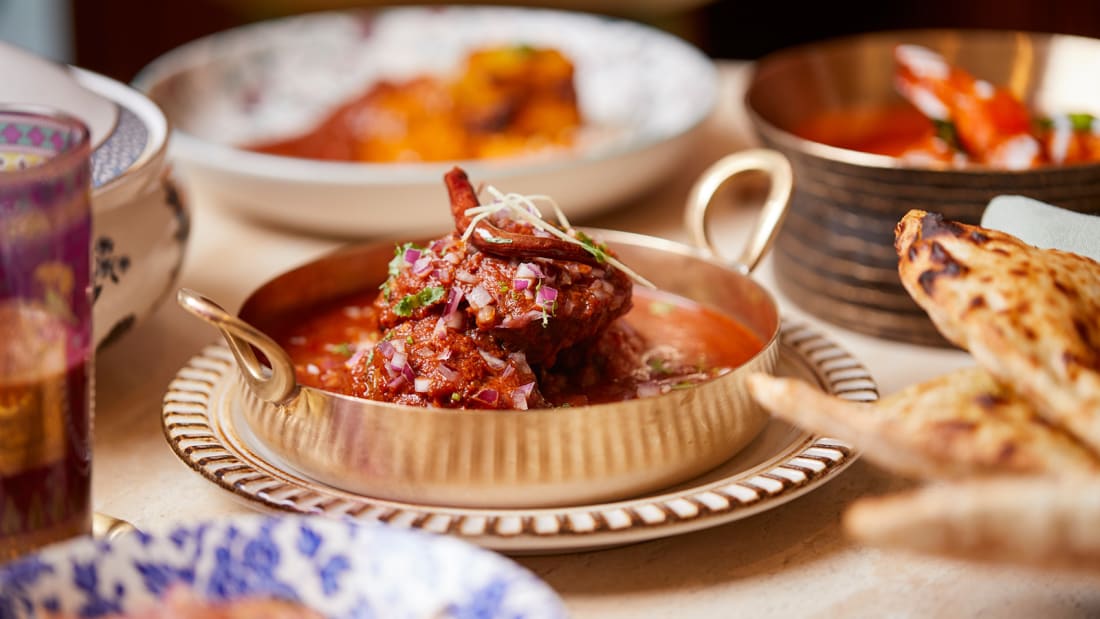
Pork cheek vindaloo

Hong Kong is widely considered one of the most challenging cities in the world to operate a restaurant — a roiling cauldron of changing tastes, cleaver-sharp competition and unsavory economics.

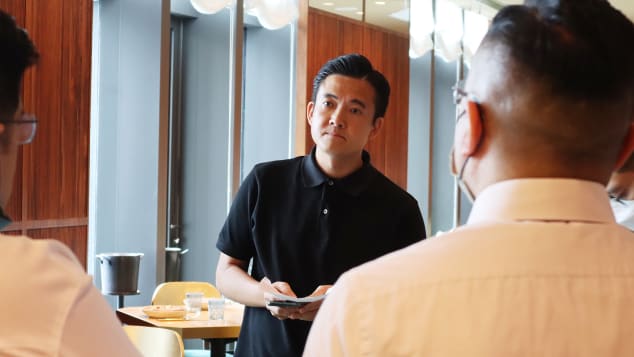
Right at the heart of its culinary world, with connections to at least half of its hottest tables, is publicist Geoffrey Wu.

Wu and his 10-year-old consultancy firm The Forks and Spoons work with some of the most decorated restaurants and bars in town, such as the two-Michelin starred TATE Dining Room and Ando, one of the most sought-after reservations in town.


An atypical publicist

Geoffrey Wu is the publicist behind many of Hong Kong's toughest tables.

Geoffrey Wu is the publicist behind many of Hong Kong’s toughest tables.

Maggie Hiufu Wong

“I wouldn’t say we’re better at our job than other people. I’d say we’re different, in The Baker and The Bottleman, a new casual bakery and natural wine bar by celebrity British chef Simon Rogan, where he’s agreed to spill some of the secrets of Hong Kong’s dining scene.

After being expelled from the University of Science and Technology in Hong Kong for “skipping too many classes to play cards at McDonald’s,” Wu joined Amber, the famed French restaurant under the helm of Richard Ekkebus, as operations staff in 2005.

Over the next few years he took on various marketing roles for different companies — but always found himself back in the food and beverage industry. In 2012, he opened his F&B consultancy firm.

Wu isn’t your typical food and beverage publicist. He isn’t congenial. He’s known for occasionally yelling at clients for making a mistake, or members of the media he feels haven’t done their research.

“I am not afraid to speak up — people know that for sure. Sometimes you need a consultant who is straightforward about things that must be fixed. We aren’t here to massage your ego. We are here for the results. We are here to win,” says Wu, sounding more like a football coach than a PR professional.

“If I wanted to please everyone, I’d go sell ice cream. Luckily, most of my clients understand.”

Among these clients is Yenn Wong, founder and chief executive officer of JIA, a restaurant group behind popular award-winning Hong Kong eateries like Mono and Duddell’s.

“The Forks and Spoons understand and personalize the needs of each concept and is always staying very current with the relevant strategies to ensure we as clients get the most publicity to our target audience, which ultimately delivers positive revenue growth.


‘The most cutthroat F&B market in the world’

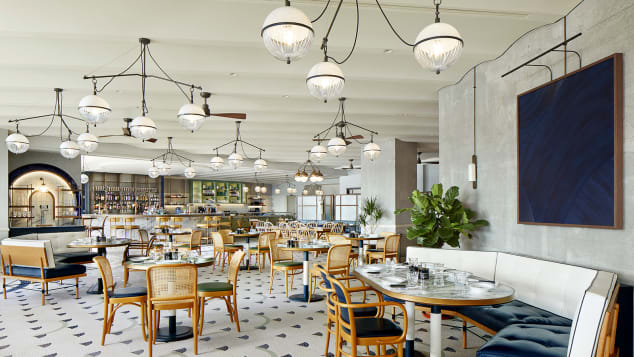
Dinner tables at Bluhouse, a new Italian restaurant at Rosewood Hotel, are often booked out two months in advance.

Dinner tables at Bluhouse, a new Italian restaurant at Rosewood Hotel, are often booked out two months in advance.

Courtesy Bluhouse

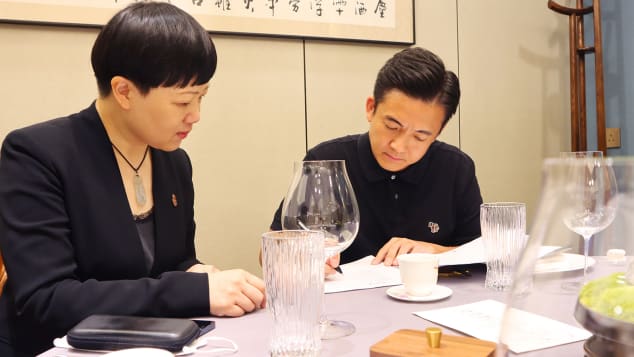
One of the important duties for a F&B publicist is to be physically present at a restaurant, according to Wu. He is either tinkering with menus, sampling new dishes or simply meeting with clients.

It could be anything from translating the restaurant’s a la carte menu from Chinese into English to working with chefs on choosing dishes for a tasting menu, “so you can see what’s happening and let the staff know that you care,” says Wu.

For instance, later that day, he says he’s having a trial lunch at Bluhouse, a new casual Italian dining concept at the Rosewood Hotel in Kowloon.

“At a tasting, we’ll look at everything — taste, presentation and temperature of the food. We also look at furniture, operation flow, pricing, etc.,” he says. “No new restaurant is ever perfect, but let’s try to minimize the error.

“We have only worked with clients in Asia — Hong Kong, Macao, Maldives, etc — but I really believe that Hong Kong is the most cutthroat food and beverage market in the world.”

His claim isn’t baseless.

Getting the opening right is essential in Hong Kong due to its competitiveness.

The city is frequently named as the world’s most expensive rental location. And Hong Kong residents are some of — if not the — biggest spenders on dining out, especially pre-Covid. Food imports are extremely expensive.

“It’s such a condensed market,” says Wu.

“People always talk. Hong Kong customers are also very knowledgeable. If you don’t get it right from the get-go, you have to revamp many things. The question is — will the customers give you a second chance? There are so many choices that chances are they’d go somewhere else.

“So to build a successful restaurant, it’s important to make sure the opening is a strong one. With good word of mouth then businesses will come. It’s that simple.”

Case in point: Bluhouse. It opened in June and dinner reservations are full through October and November at the time of the writing.


Chefs have a bigger role than ever


Hong Kong’s F&B industry has evolved rapidly in the last decade, thanks in part to the arrival of Michelin Guide in 2009 as well as the rise of social media and the local food community.

Chefs in Hong Kong have experienced a shift in their roles.

“Some 20 years ago, chefs mostly just cooked and served food,” says Wu.

“Now in 2022, there is also this thing called relationship building. Chefs have to show their faces. They have to touch the tables and to take pictures with guests. The job of a chef is much bigger than before. It all goes back to a need for human connection. Customers, media, influencers, bloggers — everyone wants to have a human connection.”

And it just makes good business sense — guests are more likely to return to a restaurant where they have established a relationship with the chef.

The problem, of course, is that chatting with diners doesn’t come naturally to all chefs. That’s where Wu comes in.

“We just encourage and encourage and encourage them,” he says.

He cites Manav Tuli of modern Indian restaurant Chaat — which is also located at the Rosewood — as a success story. Chaat opened in 2020 and won its first Michelin star two years later.

Chef Manav Tuli of Rosewood Hong Kong restaurant Chaat.

Nora Tam/SCMP/ZUMA Press

Unique dishes like Tuli’s showstopping tandoori lobster — Indian food with a Hong Kong seafood twist — and a team of knowledgeable staff which communicates the stories of the food beautifully are some of the reasons Chaat is one of Hong Kong’s hardest to book restaurants.

Tables are released two months in advance and swept up in minutes.

But the biggest star of Chaat is Tuli, considered one of the city’s most beloved culinary figures right now.

“When he arrived two years ago, he didn’t know the landscape or culture of Hong Kong,” said Wu. “He is a quiet person but we align in a certain way as we both have a drive. For him, moving his family to Hong Kong with him, he wants to make this a success. So we have been working very closely since day one on that,” said Wu.

He encouraged Tuli to meet the guests and fellow chefs, joining him at events and meals as the chef built a name for himself.


Cold-calling isn’t building a relationship

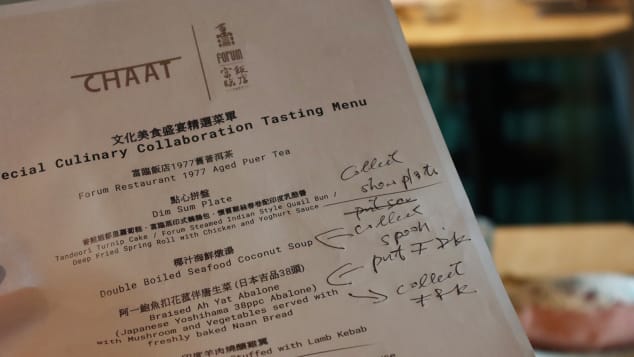
Wu recently organized a collaboration dinner between Chaat  and Forum, a Michelin three-star Cantonese restaurant.

Wu recently organized a collaboration dinner between Chaat and Forum, a Michelin three-star Cantonese restaurant.

On his days off, Wu organizes lunches for media, including revered industry critics, and chefs he works with or may work with in the future.

These often take place at venues Wu doesn’t work for, from Hop Sze, a no-frills Cantonese diner that has a six-month wait list, to the Forum Restaurant, a Chinese joint with three Michelin stars.

“I worked til 4 a.m [this morning]. I only joined because Geoffrey Wu arranged this lunch,” one food critic tells CNN Travel as he enters the private dining room inside Forum.

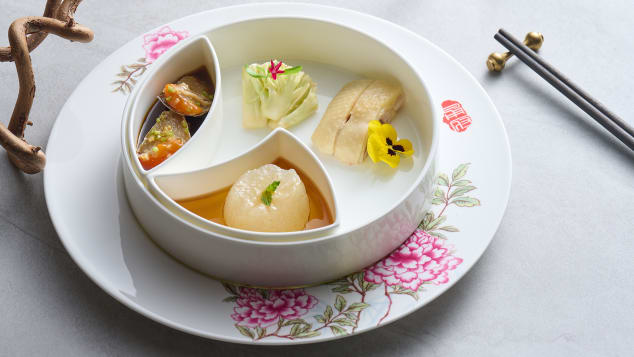
The menu of the day includes all kinds of dishes — from street food-style rice rolls to classic Cantonese sweet and sour pork and the restaurant’s famous braised abalone.

As with most lunches with Wu, there’s also an off-menu surprise.

Adam Wong, the executive chef, and CK Poon, the general manager, come in with a pushcart near the end of the meal.

“We are thinking of adding this to the next menu update,” says Poon as he caramelizes sugar for the candied apple fritter (ba si apple), a Northern Chinese-style dessert, on-site.”It’s the first time we’re doing this — so let us know what you think.”

The five-hour lunch wraps up with industry gossip over bottles of cognac.

But Wu is never not working.

He punctuates gatherings with potential collaboration ideas (Tuli and Wong exchanged ideas that day on a hookup between the two restaurants), and fills in moments of silence with jokes to keep the meal entertaining.

“I always say that I’m the chief entertainment officer,” says Wu. “Building relationships takes time. Cold-calling and sending press releases aren’t building a relationship.”


Flavor is king, but there it’s not everything

Wu recently worked with Yong Fu, an award-winning high-end Ningbo restaurant, to help refine its menu for local tastes.

Wu recently worked with Yong Fu, an award-winning high-end Ningbo restaurant, to help refine its menu for local tastes.


At the end of the day, connections won’t get you far if the food isn’t good or the restaurant refuses to evolve.

“Flavor doesn’t lie,” says Wu. “But everything — restaurants, bars, chefs — has a shelf life. It’s impossible to stay number one forever. You need to keep coming up with new ideas to continue to elevate the restaurant.”

It could be doing more tableside services, educating guests about the dishes, or simply adding a pre-dessert bite that cleanses the palate, he says.

One of Wu’s latest tasks is to edit the menu at one of his new clients, Yong Fu, a Michelin-starred restaurant that specializes in high-end cuisine from China’s east coast Ningbo region.

He’d like to trim down the original one-inch-thick book and has created a tasting menu to offer a more curated ordering experience.

In Hong Kong, Ningbo cuisine is often confused with Shanghai cuisine. Hence, Wu has worked with Yong Fu to create a tasting menu for the local diners.

In Hong Kong, Ningbo cuisine is often confused with Shanghai cuisine. Hence, Wu has worked with Yong Fu to create a tasting menu for the local diners.


In Hong Kong, Ningbo cuisine is often confused with Shanghai cuisine. The tasting menu includes dishes that diners may not know enough about to order — a “sticky” boiled wax gourd and yellow croaker fish in sour broth, for example — that amplify the trinity of Ningbo cuisine’s star flavors: “savory, umami and sticky.”

Yu Qiong, Yong Fu’s manager, is there to offer an in-depth explanation on each of the dishes.

“These are some of the things that will enrich the whole dining experience,” says Wu. He compares marketing restaurants with running: “Keep refining. Keep pushing. My belief is, just don’t stop until you are at the finishing line.”

It’s an apt metaphor. The avid runner wakes up at 5:45 a.m. on most days to fit in exercise.

“I enjoy Hong Kong on quiet mornings when the city hasn’t woken up yet. When you run, you see a lot of things and think about a lot of things,” says Wu.

As for what was on his mind that particular morning?

“I was thinking about our interview. I was thinking about not swearing. I did well — I only swore once.”


0

Best Chinese food: 32 must-try dishes


Posted on October 17, 2022 by TripHub.online

220926135452-08-body-chinese-foods-mapo-tofu-super-tease.jpg

(CNN) — With one of the world’s most diverse food scenes, China makes it nearly impossible to put together one single list that truly encompasses the “best” Chinese dishes.

But with such a huge variety of flavors on offer, it’s immensely helpful to go into the country with an introductory list of essential eats that will give you a well-rounded culinary experience.

Unfortunately, the country remains closed to international tourists, in line with its strict zero-Covid policies. In the meantime, you can dream about these delicious dishes that offer a sampling of China’s many different regions.

Can’t wait till then? Some of them can surely be found in your nearest Chinatown community.

We have included both English and Chinese (Mandarin or Cantonese, depending how they are more commonly known) names in this story.

Peking duck

Peking duck is one of China's greatest culinary exports.

Peking duck is one of China’s greatest culinary exports.

stockmelnyk/Adobe Stock

One bite into this small mountain of crispy duck skin, juicy meat, radish, cucumber, scallion and sweet bean sauce wrapped neatly in a thin pancake, and you’ll understand why Peking duck has been captivating stomachs — including those of ancient Chinese emperors — for centuries.

It’s said that roasted duck first started tantalizing taste buds more than 1,500 years ago in Nanjing, when the city was the seat of ancient Chinese imperial regimes.

The capital relocated to Beijing in the 1400s, and the imperial families brought those tasty roast duck recipes — and the chefs — with them.

It was there that the current way we enjoy the duck, wrapped in that delicate thin pancake, was invented and then popularized around the world.

Vermicelli with duck blood

Serious duck fans won't want to miss this vermicelli soup dish.

Serious duck fans won’t want to miss this vermicelli soup dish.

Govan/Adobe Stock

Many Nanjing residents will indeed tell you it’s their city — not Beijing — that’s the true duck capital of China.

The city’s obsession with the bird is evident in its wide array of duck offerings, including salted duck, pancakes made with duck grease and duck dumplings.

But nothing speaks to a duck lover’s heart quite like a cheap bowl of vermicelli soup with duck blood.

Made with duck-bone broth, duck blood curds and bits of duck offal, such as liver and gizzards, this street food dish fully utilizes every part of the bird to deliver incredibly intense flavors.

Steamed fish

It may look simple, but steaming fish is a difficult art to master.

Timing is crucial. The number of minutes — or seconds — you should steam a fish is dictated by the type and size of a fish, as well as the strength of your own stove.

Undercook it by a minute, the flesh won’t detach from the bone; overcook it, the flesh will tighten too much and the fish will lose some of its moisture, tenderness and flakiness.

Cantonese steamed fish is usually served in some sweetened soy sauce and scallions.

Dan dan noodles

It’s nearly impossible to dislike China’s soul-comforting dan dan mian, or dan dan noodles. The question is: Which version to try?

Dan dan noodles are named after the way they were originally sold more than 100 years ago — on a dan dan, a carrying pole, by street hawkers.

There are many ways to serve this famous Sichuan specialty. Some think dan dan noodles should contain a dry mix of noodles, made with minced meat, chopped scallions, spices, crushed peanuts and various sauces. Others disagree, preferring dan dan noodles in a hot, spicy, salty and nutty broth albeit with similar ingredients.

But most people would agree that dan dan noodles taste better when topped with a handful of rou saozi — finely chopped pork that’s been pan-fried in lard until golden brown and crispy.

Steamed fish head with chopped salted chili

Pro tip: Order a side of dumplings or noodles to dip into the juice after the fish heads have been gobbled up.

Pro tip: Order a side of dumplings or noodles to dip into the juice after the fish heads have been gobbled up.

dashu83/Adobe Stock

Cuisine in the mountainous, landlocked southern province of Hunan (also known as Xiang cuisine) is often cooked with a generous portion of oil, salt and chili.

The province even has its own chili-themed folk song, with lyrics proclaiming that “it doesn’t count as a dish if there is no chili. A touch of chili triumphs over an exquisite meal.”

No other dish represents Hunan cuisine as well as steamed fish heads served with chopped salted chili (duo jiao yu tou).

Duo jiao, a staple relish in Hunanese homes, is made with chili peppers that are dried, diced then preserved in a jar of salt, ginger, garlic and baijiu (Chinese liquor) for at least a week.

The thick blanket of duo jiao gives the steamed fish head a salty and spicy kick. The leftover juice is a delicious dip for noodles or dumplings after you’ve devoured the fish.

Roasted goose

Warning: Once you’ve tried a Cantonese-style, woodfire oven-roasted goose, there’s no going back. No other goose dish will please your palate in quite the same way.

Upon hitting your mouth, the goose magically falls apart, offering an explosion of combined flavors from the crispy skin, melted fat and tender meat.

Some restaurants will use special types of wood, such as camphor wood or lychee wood, to give the bird a special smoky taste.

Chaozhou cold fish/crab

Seaside Chaozhou is known for no-frills seafood dishes that serve one purpose — to maximize the fresh ingredients’ original umami flavors.

Among the best dishes showcasing this style is Chaozhou-style cold fish or cold crab.

To preserve the freshness of the seafood, fish and crabs are lightly seasoned in salt before they’re steamed. They’re then cooled and served at room temperature.

The fish is often dipped in a special soy bean paste from Poling, while the crabs are served with a garlic and vinegar sauce.

Cross-the-bridge rice noodles

Legend has it that cross-the-bridge rice noodles were invented many years ago by a loving wife. Her husband studied on an island, so the wife would travel across a bridge to deliver him his daily lunches.

As the food would be cold after the journey, the disheartened wife decided to bring a pot of scalding hot chicken broth, along with the rice noodles and raw ingredients.

It was an ingenious plan, really. The chicken oil on the surface of the soup would keep the liquid warm. When the husband was ready to eat, she’d cook all the ingredients by pouring them into the hot soup.

Today, many noodle shops offer their own style of cross-the-bridge rice noodles, offering a choice of different ingredients and soup bases.

Kungpao chicken

A flavorful partnership of chicken and peanuts.

A flavorful partnership of chicken and peanuts.

somegirl/Adobe Stock

One of the most internationally famous Chinese dishes, Kungpao chicken is made by stir-frying diced chicken pieces with scallions, ginger, peppercorns, chili and deep-fried peanuts.

There are different origin stories, but many believe the dish was inspired by a former Sichuan governor in the 1800s called Ding Baozeng, whose nickname was Ding Gongbao — alternatively romanized as Kungpao.

It’s said that Ding loved a sour and salty fried chicken dish from China’s Shandong province. After he was relocated to Sichuan, he asked his chef to add some local chili and peanuts to the dish — and the rest is history.

Sweet and sour pork / Lychee pork

Deep-fried pork can feel a bit heavy, especially in unforgiving summer weather. Thankfully, we have sweet and sour pork.

The pineapple in the dish and a sauce made with sugar, vinegar and soy sauce add some freshness to the crispy pork.

If you’re a fan of sweet and sour pork, you should also try the Fujian version of the dish — lychee pork. By incising the surfaces of the pork pieces, they resemble lychees’ uneven skins after being deep-fried.

There is no lychee in the dish traditionally — the sweetness comes from sugar, but some restaurants add lychee or use lychee sauce to match its name.

Bonus: The rugged surfaces on the pork hold more sauce and have a more tender texture.

Dumplings

Who needs French fries when you have dumplings?

Whether you love them steamed, boiled or pan-fried, jiaozi pack a full punch of carbs, proteins and vegetables in one mouthful.

Vinegar and chili oil are some of the best condiments to go with Chinese dumplings.

Rouyan pork dumplings

One of the most interesting styles of dumplings is Fujian’s rouyan version — delicious enough to earn their own spot on this list.

The mini pork dumplings have an extra chewiness to them as their wrappers are made of pork and some flour.

Wenchang chicken rice

While Hainanese chicken rice isn’t actually from China’s Hainan province (it was first served in Malaysia), the dish was inspired by the tropical island province and its famous Wenchang chicken.

Made with a special breed of poultry from the island’s eponymous city, Wenchang chicken is prized for its thin skin, tender meat and sweet flavor.

The most common way to cook a Wenchang chicken is by blanching and air drying it. Similar to Hainanese chicken rice, the Wenchang version is often served with yellow chicken fat rice and chicken soup.

Hainan locals usually prefer garlic and ginger paste, chili sauce and the juice of small tangerines as condiments.

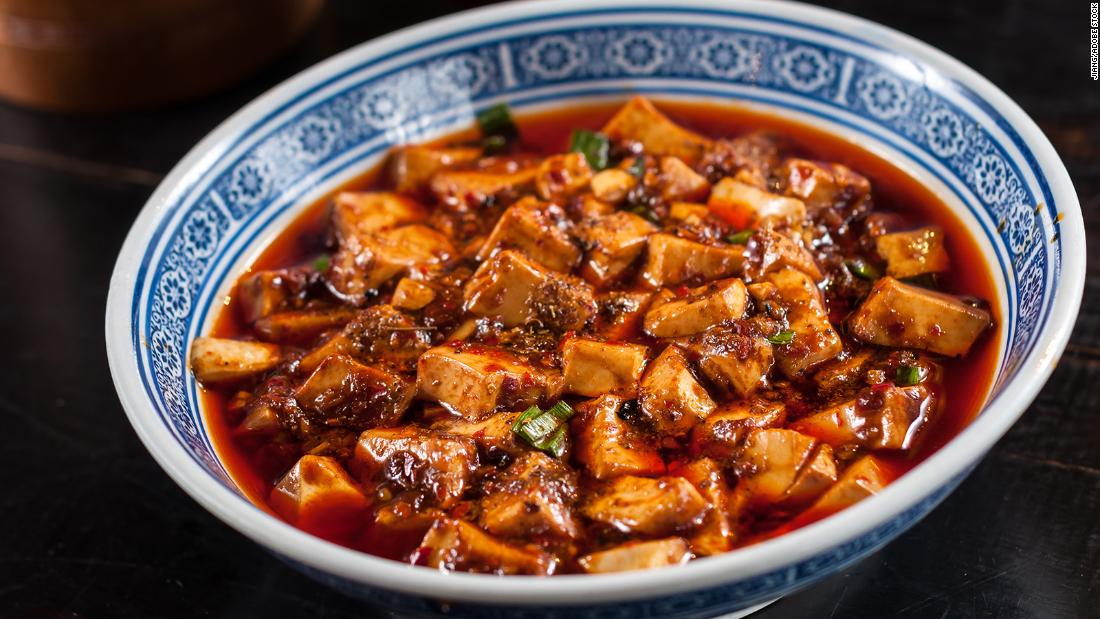
Mapo tofu

Mapo tofu is one of Sichuan's most popular dishes.

Mapo tofu is one of Sichuan’s most popular dishes.

Jiang/Adobe Stock

A memorable mapo tofu packs a boatload of zing — salty, peppery and spicy flavors should all hit the taste buds in a single spoonful thanks to the different types of spices, peppers and chili used in the dish.

Discerning local gourmets insist that the best mapo tofu should be made with Hanyuan peppercorns and broad bean chili paste from Sichuan’s Pidu district.

It’s most commonly cooked with minced pork or beef — and tofu, of course. But as the Sichuan dish is so wildly popular nowadays, restaurants often serve creative versions of mapo tofu with different types of meats.

Pork belly with dry, pickled Chinese mustard

Tender, well-braised pork belly is naturally irresistible — but the star of this Hakka dish is actually mei cai, a dry, pickled Chinese mustard that gives the hearty stew its sour and salty taste.

It’s said that every Hakka family, a traditionally nomadic tribe in China, pickle their own mei cai.

When they make too much of it, they will whip up a mei cai relish that’s a great topping for plain rice and noodles.

Fried rice

Whether it’s an elevated version made with diced abalone and truffles, or a leftover medley of soon-to-spoil ingredients from your fridge, every good version of classic fried rice shares two important ingredients — dry but succulent rice and wok hei (also known as the breath of the wok).

Jian bing guozi

One of the most welcome sights on a cold morning in Tianjin in northern coastal China is a jian bing stand, with its sizzling hot pan.

Jian bing guozi is composed of two elements: Jian bing (crepes) and guozi (deep-fried crisps).

To make a jian bing guozi, first, a mung bean mixture is fanned out with a ladle onto a flat-iron pan. Eggs and scallions are then spread out on the crepe.

After the pancake is flipped over, a dollop of bean paste, sheets of guozi crisps (or, sometimes, deep-fried breadsticks and vegetables) are added before the vendor — usually an elderly man — folds the stuffed and toasted pancake and hands it to you in a paper bag.

Xiaolongbao

Use a spoon to catch the spilled soup from a xiaolongbao.

Use a spoon to catch the spilled soup from a xiaolongbao.

yooranpark/Adobe Stock

Wondering whether the xiaolongbao wrapper will break on the long journey between the steaming basket and your mouth is one of the most suspenseful moments that can take place at a dining table.

Amassing a huge following in and outside China, xiaolongbao, also called xiaolong tangbao (translated as “small basket soup bun”), is a mix of soup and pork packed inside a thin dumpling wrapper.

In addition to pork, the soupy dumplings can also be filled with crab meat and crab roe.

Chen cun rice noodles

If you’re one of those people who thinks the real star of beef chow fun is the noodles and not the beef, you should try Chen cun fen (Chen village flat rice noodles).

Chewier, wider and thinner than the usual flat rice noodles, Chen cun fen is a specialty from Chen village, a town in Shunde district in the Pearl River Delta.

In addition to being stir-fried in a noodle dish, the semi-translucent and smooth Chen cun fen make a great base layer for dishes such as steamed spareribs and seafood as the noodles absorb all the flavors from the other ingredients.

Dongpo pork

Named after famous poet, painter and statesman Su Dongpo (who lived about 1,000 years ago), Dongpo rou is made up of braised pork belly, rock sugar, soy sauce, yellow wine and other seasonings.

The result is a richly flavored and extremely tender pork slab that can easily be pried apart with chopsticks.

It’s a delicious dish that goes well with steamed white rice.

Hot and sour soup

Surprisingly, China’s famed hot and sour soup isn’t just great at warming up your body in winter.

Local Sichuanese believe that the soup can also expel excessive humidity and hotness from one’s body in summer as well.

A bowl of hot and sour soup should have a balance of sourness (from vinegar) and spiciness (from peppers) — but not hotness from chili.

Shreds of tofu, Chinese mushrooms, wood ears and bamboo shoots are some of the common ingredients found in the thick soup.

Dim sum

Small baskets, big flavors.

Small baskets, big flavors.

artitwpd/Adobe Stock

Dim sum refers more to a style of serving food — it’s a type of meal in Cantonese food culture — rather than a specific dish.

It’s a cunning way to include many different varieties of small plates — from pan-fried radish cake to prawn dumplings to siu mai — in one meal.

At the same time, dining on a combination of these dishes during a dim sum session is far more enjoyable than eating just one version on its own.

Beef/fish poached in chili oil broth

Don’t be fooled by its bland-sounding Chinese name — shui zhu, which translates literally to “water boil.”

Shui zhu is a cooking technique that was first developed in Sichuan cuisine. The word water (shui) refers to the hot, spicy chili oil broth that is used to poach thinly sliced beef (shui zhu niu), pork (shui zhu roupian) or fish (shui zhu yu).

Today, the photogenic crowd-pleaser is often served with sliced celtuce (a type of lettuce) and flat mung bean noodles in the broth, too.

Barbecue pork

The best barbecue pork should be slightly charred on the outside and contain just the right amount of sweetness and saltiness from the maltose, wine and soy sauce.

A Cantonese roast shop will let you choose the level of fattiness you want in your char siu, Cantonese for barbecue pork.

Half lean, half fatty char siu is the go-to option if you are a newbie.

Barbecue pork is a highly versatile ingredient served in many delicious dishes — from char siu macaroni soup for breakfast to char siu bao — steamed buns – at dim sum.

Bao

Bao — a steamed bread roll filled with a variety of ingredients including meat or vegetables — come in many shapes and sizes.

It could be a plain bao with a glossy and smooth exterior (mantou), or an oversized steamed volcano-shaped bao stuffed with an entire meal’s worth of food (da bao, or translated as “big bao”).

But one of the best baos is undoubtedly sheng jian bao.

The pan-fried bao is filled with pork and broth, while scallions and white sesame seeds are sprinkled on top.

Rou jia mo

The Mausoleum of Terracotta Warriors is usually the reason travelers visit Xi’an, but this western Chinese city’s delicious and similarly historical rou jia mo is another great reason to head there.

The ubiquitous street eat consists of a grilled mo (flat bread) and an overflowing amount of shredded pulled pork belly that has been braised in soy sauce, rock sugar and spices such as cinnamon, star anise, cloves and peppercorns for hours.

Undercooked mo is a big no-no. A common saying in Shaanxi province goes “tie quan hu bei juhua xin,” which means “iron ring, tiger’s back and chrysanthemum’s heart ” — the perfect patterns you should look for on a well toasted mo.

Cantonese herbal soup

Cantonese parents are the real experts when it comes to therapeutic herbal soups, which are simmered for hours to infuse the liquid with healing qualities and deliciousness.

Various seasonal ingredients offer different cooling or warming qualities to restore balance in the body.

For example, apple, snow fungus and lily petal soup will hydrate your body, whereas winter melon and barley soup will cool you down in hot weather.

Preserved sausages

Chinese preserved sausages are usually steamed before serving.

Chinese preserved sausages are usually steamed before serving.

onlyyouqj/Adobe Stock

The Chinese version of salami is often categorized into two main types: Laap cheung and yun cheung (in Cantonese).

Laap cheung is preserved meat sausage that has a slightly sweet taste. Yun cheung, on the other hand, is mostly made with offal from poultry, giving it a stronger and gamier flavor.

Unlike their European counterparts, Chinese preserved sausages should be steamed before eaten.

You can find them wrapped in buns, stir-fried with sticky rice or steamed in a clay pot.

Sweet taro paste

The secret to a delicious Fujian-style taro paste is binlang yu, a special breed of yam from Fujian’s Fuding county. The white and purple flesh of a binlang yu has vibrant fragrances and an earthy, nutty and sweet taste.

To make the dessert, the taro is cooked and mashed before it’s mixed with sugar and lard.

The thick, silky taro mash will then be garnished with sweet toppings such as dates, candied cherries and gingko.

Congee

When it comes to nourishing your digestive system, in sickness and in health, it’s all about congee (porridge, commonly made with rice).

A popular breakfast item in many parts of China, the versatile cheap eat can be served plain with a drizzle of soy sauce and scallions, or stewed with savory ingredients such as chicken or fish.

Lean pork floss and century egg congee is one of the classics served in the south of China. Congee made with millet instead of rice and flavored with pumpkin is popular in the north.

Those who are extra hungry can order a side of soy sauce-fried noodles, deep-fried breadsticks (youtiao) or soy milk. These can be enjoyed on the side, or you can tear up the breadsticks or add some noodles to the congee.

Chaozhou beef balls

Most people who visit Chaozhou can’t resist picking up a family-sized bag of super bouncy and flavorsome meat balls made of beef beaten by hand to bring home with them.

Highly praised for their understanding of beef, Chaozhou people are also famous for other dishes such as beef hot pot.

Sweet rice balls

One of the most loved desserts in China, sweet rice balls, or tangyuan, can be found in many regions.

Ningbo is one of the best places to sample these round mochi-like desserts.

The soft, pillowy exterior is made with sticky rice while the filling is made of black sesame, sugar and lard.

The lard gives the filling an extra fragrance and sheen.


0

She fell in love with her tour guide. Two weeks later they were engaged


Posted on October 17, 2022 by TripHub.online

221012102404-03-chance-encounters-benin-restricted-super-tease.jpg

(CNN) — Rachel Décoste landed in West Africa’s Republic of Benin in August 2018, anticipating an important journey of self-discovery, but not predicting the extent to which the trip would change her life.

On her first day exploring Benin, Rachel asked a passerby for directions. Two weeks later, Rachel and the stranger were engaged. Within six months, they were married.

Rachel grew up in Ottawa, Canada, the daughter of Haitian parents who’d immigrated to Canada in the late 1960s. As an adult, Rachel relocated to Washington DC for college, later working for a bipartisan tech program associated with the United States Congress.

Rachel loved this job, she loved the diversity of Washington and loved working in public service. When her US visa was up for renewal, Rachel, then in her early 40s, figured she’d work remotely for a few months before returning to DC.

But rather than working from Canada, she hatched a plan to set up her desk further afield.

Earlier that year, Rachel had submitted her DNA to an online ancestry site. Rachel had long known she was the descendent of enslaved Africans, but until she got the results, she hadn’t known where her forebears had lived. Now, she had a list of countries where she had roots: Senegal, Ivory Coast, Togo, Ghana and Benin.

“DNA tests for a descendant of enslaved Africans has very deep significance for us,” Rachel tells CNN Travel. “Even though it’s not a precise science, when you get the map of where your ancestors came from, it’s an emotional journey.”

Rachel arrived in Benin towards the end of her five month remote working trip. She’d already visited the other countries on her list, and her African trip was shaping up to be an extraordinary journey of self-discovery. Nevertheless, Rachel didn’t know what to expect from Benin.

“Honestly, I don’t know if I could find Benin Republic on a map before this,” she says.

She booked a room in a bed and breakfast in the port city of Cotonou, planning to stay there for two weeks — working from the B&B and exploring the country in her spare time.

Following a couple of days settling in, Rachel ventured out for the first time. She planned to visit Ouidah, once one of the most active slave trading ports in Africa. She expected this would be a moving and thought-provoking experience.

“I’m sure that one of my ancestors passed by there, just because of my DNA test,” says Rachel.

Exiting her room, Rachel searched around for the manager of her bed and breakfast — she was looking for guidance on how best to travel to Ouidah.

“She’s nowhere to be found. And then I look for the security guard, and the security guard is on break.”

Rachel figured her next best bet was asking a passerby outside, so she opened the gates and glanced around.

The first person she spotted was a man about to get on a motorcycle, parked just outside.

Rachel greeted the stranger in French — as a French Canadian, French is her first language and it’s also the official language of Benin — and politely asked him how to get to Ouidah.

“You have to go to a certain intersection downtown, where all the bush taxis are,” explained the stranger. “You find the taxi going to your destination, you pay for your seat, and then you’ll get there.”

He started passing on directions to the intersection, but then, realizing they were a bit complicated, changed his tune.

“If you want. I can bring you there, it’s about 10 minutes away,” he suggested, gesturing to his bike.

It was about 9 a.m. Rachel was wary of trusting someone she didn’t know, but she decided she was unlikely to come to harm in broad daylight. She agreed.

“I take a chance, hop on the back of his motorcycle, no helmet,” she recalls.

Traveling together

Honoré and Rachel explored Benin together.

Honoré and Rachel explored Benin together.

Woke Enterprises, Inc. Canada

The motorbike-riding stranger was Honoré Orogbo, a single father and business owner in his thirties who’d lived in Cotonou all his life and just happened to be passing by that morning.

When Rachel opened the bed and breakfast door, Honoré had just finished eating some breakfast he’d grabbed from a nearby street kiosk.

From the outside, Rachel’s accommodation wasn’t obviously a B&B. Honoré says he assumed she was the owner of the house. It was only when she asked for directions that Honoré realized Rachel was a visitor.

When Rachel and Honoré arrived at the taxi rank in Cotonou city center, they realized the one heading to Ouidah was pretty empty. Honoré explained it would be some time before it departed — the driver wouldn’t leave until the taxi was full.

Rachel was disheartened. She didn’t have time to wait around — she wanted to spend the whole day in Ouidah without feeling rushed, and to safely return to Cotonou before sundown.

Sensing her disappointment, Honoré came up with a suggestion. He had a friend in Ouidah he’d been hoping to visit — while he hadn’t been planning to go that day, he could, he had a day off.

“I’m like ‘Cool. I’ll pay for gas. Let’s go,'” recalls Rachel.

Just over an hour later, they arrived in Ouidah.

“He shows me how to get back — where the bush taxis are that I can get back that afternoon — and he shows me where the Slave Museum is. And I’m like, ‘Okay, good to go. Thanks, sir,'” recalls Rachel.

But before they were due to go their separate ways, Rachel asked Honoré if he wanted to get brunch. She wanted a bite to eat before she started her tour — and extending the invite to Honoré felt like the polite choice, he’d gone out of his way to help her, after all.

Honoré agreed, touched by the gesture. The two sat down to eat.

Rachel was aware that she was a woman traveling alone, and while Honoré had been nothing but polite and respectful, he was still a stranger, so she told him she was married.

She also didn’t share details of her job, or her life in the US. But she did explain how she was hoping to travel around Benin over the coming days. She asked Honoré if he had any friends or contacts who worked as chauffeurs or tour guides, and who might be interested in escorting her around over the next couple of days. She figured that might be easier than relying on taxis.

Honoré contacted a tour guide friend, but he was fully booked

“So I said, ‘Well, how about you? Can you be my escort? You helped me out this morning, can I just pay you to do that for three days?'” recalls Rachel.

“No, I’m not a I’m not a tour guide,” said Honoré. “I don’t know my country’s history by heart, and that’s not what I do.”

Rachel backtracked. She didn’t really need a tour guide — there would be experts at all the historical sites she planned to visit — she just needed a ride.

After a bit of back and forth, Honoré agreed to drive Rachel.

“When she insisted, I said ‘Why not?'” Honoré recalls today.

He wanted to help Rachel, Honoré says. She seemed like a “good person,” based on the way she’d approached him, the way she’d asked him questions and the way she’d invited him to brunch.

The two agreed Honoré would drive Rachel around for the next few days, starting that day in Ouidah, and Rachel would pay him for his services.

Growing closer

Here's Rachel at Ganvie Lake Village in Cotonou, Benin.

Here’s Rachel at Ganvie Lake Village in Cotonou, Benin.

Woke Enterprises, Inc. Canada

For the rest of the week, Honoré took Rachel to Benin’s most important sites.

Touring Benin was a powerful experience for Rachel. She says visiting the slave fort, inside Ouidah’s Museum of History, “is a pilgrimage that every afro-descendant should visit to remind us of the cruelty that our ancestors survived.”

“I didn’t know this before going there in person, but if Las Vegas was taking bets on the survival of enslaved Africans, the odds of my being alive today would have been slim to none,” says Rachel. “I am a walking, talking miracle. I am the ‘one percent.’ I owe it to those who didn’t make it to live my best life.”

While traveling around Benin, Rachel and Honoré talked. While Rachel still didn’t disclose many details about her personal circumstances, but she found herself opening up to Honoré about her thoughts and feelings. Honoré opened up in turn.

“First conversations were about learning about myself, my family, my situation, who I am, who I really am,” he says.

“We were very open and very candid, because we were strangers and we’ll never see each other again,” recalls Rachel.

She remembers being touched when Honoré explained that he didn’t have a new model of motorcycle because he put all his money towards his son’s education.

“He says ‘I’d rather have my kid have those opportunities than drive a fancy motorcycle.’ And I thought, ‘Wow, those are the values of my parents.’ I saw myself in those values,” says Rachel.

In one of their many conversations, Honoré mentioned his brother was a tailor. On their fourth day together, Honoré took Rachel to a market to help her buy fabric that his brother could make into a dress.

Rachel was overwhelmed by the choice — so much so that she asked Honoré to pick his favorites. He opted for two pieces of colorful, bright Ankara fabric. The third option was a white, gray, lace style, called lessi. Rachel loved it, and figured the resulting dress could be “appropriate for a baptism or some kind of special occasion.”

Honoré's brother made clothing for Rachel and Honoré out of the fabric he picked for her at the market.

Honoré’s brother made clothing for Rachel and Honoré out of the fabric he picked for her at the market.

Woke Enterprises, Inc. Canada

In one of their many conversations driving to Benin landmarks, Honoré mentioned to Rachel that he would usually travel to Lomé, the capital of the neighboring country of Togo, when he and his friends wanted a night out.

Rachel was intrigued.

“I can’t guarantee that I’ll ever come back here. This is a once in a lifetime trip where I’m getting paid while I’m working in a foreign country. I want to take advantage of every opportunity,” she remembers thinking.

“So I said, ‘Well, I have to go back to work this week. But next weekend, if you’re willing, I could get two hotel rooms and we could go to Togo together.”

The following weekend, Honoré took Rachel to a poetry slam night in Lomé, followed by a bar with live music. They stayed out all night.

“We’re dancing. It’s just pure joy,” says Rachel.

It was around this time that Rachel started to feel things shift. She felt comfortable around Honoré in a way she’d never felt before.

“We get along great. He laughs at my jokes,” she recalls thinking. “I had a bit of a meltdown a couple times — which I’m not proud of — where he didn’t freak out, because usually angry Black women scare people. But he took it all in his stride.”

Rachel even briefly met Honoré’s son.

Rachel and Honoré, pictured here on a beach in Cotonou, grew closer and they soon realized they had feelings for each other.

Rachel and Honoré, pictured here on a beach in Cotonou, grew closer and they soon realized they had feelings for each other.

Woke Enterprises, Inc. Canada

She described the situation in an email to one of her close friends back in Ottawa.

“I think I think this person should be my husband. But am I crazy? I’ve known this guy for a week. Is that stupid? Tell me if I’m crazy,” she wrote.

Her friend wrote back: “Rachel, you are not a stupid person. You have good judgment. You are a good judge of character. If he’s the one, grab him.”

For Honoré, the trip to Togo was a turning point too.

“I think it’s that night that the lightning struck,” he says. “It was not lightning but it was a feeling of love. I think that’s where the feeling of love started.”

Rachel only had one more week in Benin before she was set to return to North America. She decided she had no time to waste.

“I told him that I really wasn’t married. And he was very happy to hear that. And we got together,” she says.

“I was kind of surprised,” says Honoré now. “I thought a woman like that would probably have a husband.”

“Next day I saw her differently,” he adds. “Not like a tourist but my soulmate. That’s how the relationship started. Step by step.”

For the remainder of Rachel’s time in Benin, Rachel and Honoré spent as much time together as they could.

Long distance engagement

Honoré and Rachel often wear clothing made from matching fabric, a Benin tradition.

Honoré and Rachel often wear clothing made from matching fabric, a Benin tradition.

Woke Enterprises, Inc. Canada

On the evening of Rachel’s departure, Honoré recalls sitting with her on a beach. He was enjoying the moment, but also considering Rachel’s impending return to Canada, and what it meant for their burgeoning romance.

“We were facing the ocean. In my head, I was thinking ‘the past two weeks that I’ve spent with you, I have no regrets. We had a great time together. I was really happy to meet you.'”

The two talked about the future, and if and how they could make a long distance relationship work. They realized they were both equally committed, and so they decided to get engaged, and that Honoré would relocate to North America.

It was a big decision. They’d only known one another for a couple of weeks. And for Honoré, emigrating had never been a goal. It would be a big change for his son. But Honoré says he decided to “follow my instincts, to follow my heart.”

Meanwhile, Rachel quit her life in DC, and went back to Canada. Rachel says her friends were shocked, but supportive and happy when she told them about the whirlwind romance. Her parents were more skeptical, she says. But they came round when they met Honoré, and saw how in love he was with their daughter.

Rachel returned to Benin six months later, in January 2019, for her wedding to Honoré. She wore the dress made from the white lace fabric Honoré had picked for her in the market the summer before. It felt like fate.

Here's the couple at Canadian wedding celebrations.

Here’s the couple at Canadian wedding celebrations.

Two Trees Photography by Timothy J Baklinski

Meanwhile, the couple planned a Canadian wedding celebration for the following year, navigating Honoré and his son’s immigration journey in the meantime.

“I took the time during the separation to start preparing myself mentally and psychologically for a big move,” recalls Honoré. “I had to think about the huge life change that was going to be ahead of me, the cultural differences. I know people who went to the Americas and it wasn’t necessarily easy.”

Honoré also prepared his child for the move.

“I explained to him that, ‘My son, we will go to a different country and we will start over together. With time, you will have new friends, you will have new cousins. You will have everything you wish for. everything that you have here you will have over there, in time.”

Canadian reunion

Today, Honoré and Rachel live in Canada together. Here they are pictured at Niagara Falls.

Today, Honoré and Rachel live in Canada together. Here they are pictured at Niagara Falls.

Woke Enterprises, Inc. Canada

Honoré and his son arrived in Canada in the middle of winter.

“It was really really really cold,” he recalls. “I just didn’t understand how cold it could be outside. Because the cold of Africa is a whole different kettle of fish, than the cold in Canada.”

Still, once Honoré was kitted out with Canada-appropriate boots, coat and mittens, he started adapting to life in a new country.

Rachel and Honoré say they were over the moon to be together. The months apart waiting for Honoré’s visa approval had been long.

Honoré’s son settled in very quickly, and Rachel adapted to becoming his stepmother, a role she says she loves.

“I’m embracing the challenge and the joys of motherhood,” she says now.

“It’s not easy when you’ve been single since forever to adjust to having to share your life. But he’s a good kid.”

Today, Honoré and Rachel live in Ottawa. Rachel works as a diversity and inclusion expert, while Honoré is studying.

Here are Honoré, Rachel and their son in Ottawa together.

Here are Honoré, Rachel and their son in Ottawa together.

Woke Enterprises, Inc. Canada

Rachel and Honoré are also bringing up their son together, and run a business selling warm, Canada-winter-appropriate pajamas with African prints, called Woke Apparel.

The pandemic put a stop to their big Canadian wedding celebration plans, but they enjoyed a small ceremony in summer 2020.

Reflecting on their journey together, Honoré says their story makes him consider that “sometimes you shouldn’t force fate.”

He sees meeting Rachel as “destiny” but considers moving across the world to be with her as proof of the importance of trusting your gut.

“Just follow your heart,” he says. “Follow your heart with reckless abandon.”

As for Rachel, she says their love story is a reminder to her that “it’s never too late.”

“You’re not too old to just travel alone by yourself, in a country that you don’t know, where you don’t know anybody. You’re never too old to find love. You’re never too old to become a mother.

There is no expiration date on opportunity. And grab life by both hands. If I can do it. You can.”


0

Yayoi Kusama’s yellow pumpkin is back on Naoshima Island, Japan


Posted on October 17, 2022 by TripHub.online

221007021202-02-kusama-naoshima-yellow-pumpkin-returns-intl-hnk-super-tease.jpg

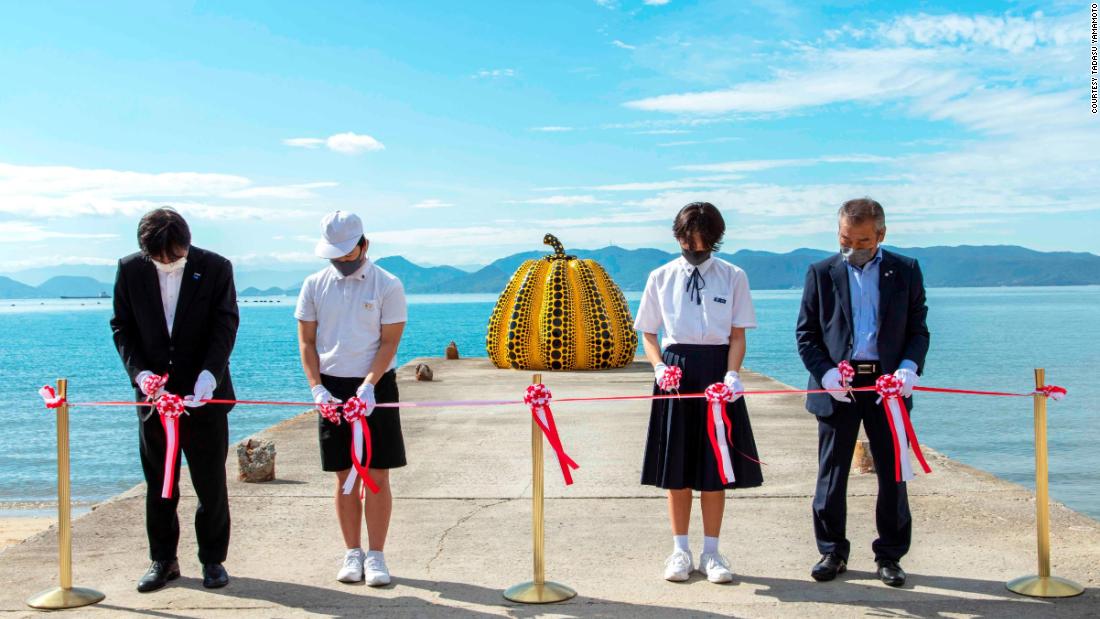
(CNN) — Japanese artist Yayoi Kusama’s famous yellow pumpkin sculpture was reinstalled on October 4th on Naoshima island after it was swept into the sea and badly damaged during a typhoon last summer.

Local residents, students and officials gathered to celebrate the art island’s trademark sculpture as it was placed back on the pier on Naoshima Island, which is in the Seto Inland Sea. It had been there since 1994.

“Since (the pumpkin) was a symbol of Naoshima, it is great to see the same artwork installed again at the same spot. We are happy to share the joy with residents in Naoshima,” said Yukari Stenlund, a spokeswoman from Benesse Holdings, the company that manages the sculpture and the rest of the island’s art offerings, told CNN Travel.

The sculpture, which is two meters tall, 2.5 meters wide and made of fiberglass-reinforced plastic, was swept away into the sea and broken into three pieces in August 2021.

According to Stenlund, Kusama’s production team opted to create a brand new yellow pumpkin sculpture — while staying true to the original — after evaluating the extent of the damage.

An unveiling was held on October 4, 2022.

An unveiling was held on October 4, 2022.

Courtesy Tadasu Yamamoto

The artist’s production team started working on a new pumpkin earlier this spring and made the sculpture’s outer shell 10% thicker than the original so it could withstand strong waves and wind in the future. In addition, a hook was embedded into its stem so it could be easily dragged to safety if another typhoon hits.

“We hope to exhibit the pumpkin as a symbol of the connection between Naoshima and the world,” Stenlund added, saying that message underpinned the 1994 “Out of Bounds” exhibition, which saw the sculpture first installed on the island.

On the Japanese island of Naoshima, contemporary sculptures dot the landscape, while abandoned houses are turned into works of art.

Naoshima is a quiet with 3,200 residents, located in the Setouchi Sea, north of Shikoku. With three modern and contemporary art museums, it is known as an “art island,” The yellow pumpkin, which contrasts with the blue sea, has long been a popular site for Instagram photos.

The main way to access the island is a 20-minute ferry ride from Okayama city, which is 50 minutes away by bullet train from Osaka.

The pumpkin’s timing couldn’t be better. Japan opens its borders to leisure tourists on October 11, and the Setouchi Art festival runs until November 2022.

Photo of the “Yellow Pumpkin” welcoming ceremony courtesy Tadasu Yamamoto


0