

triphub

TRIPHUB.online

October 14, 2022

This Italian icon suddenly looks different


Posted on October 14, 2022 by TripHub.online

221014132217-david-crop1-1.jpg

Editor’s Note: Sign up to CNN Travel’s free nine-part Unlocking Italy newsletter for insider intel on Italy’s best loved destinations and lesser-known regions to plan your ultimate trip. Plus, we’ll get you in the mood before you go with movie suggestions, reading lists and recipes from Stanley Tucci.


CNN
 — 

For over 500 years, Michelangelo’s sculpture of David in Florence has stood unchanged, the marble icon of masculinity, and one of the world’s most famous works of art.

But as Italy emerges from the pandemic, the David has got a whole new look.

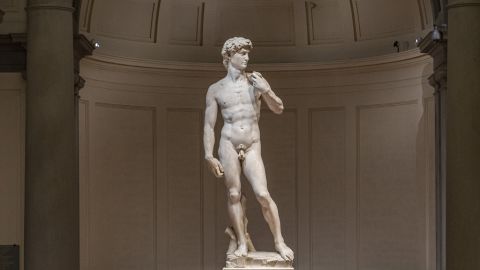
A new lighting system has revolutionized how the famous statue looks, with small details visible for the first time in its history.

“A few days ago, I noticed muscles on the body that I’d never seen before,” says Lucia Lazic, a guide who visits the Accademia Gallery most days.
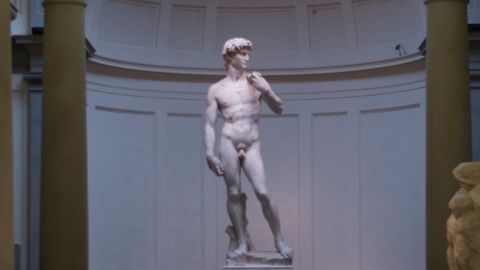
Emilio Fraile/NurPhoto/Getty Images

Courtesy Guido Cozzi

Michelangelo’s David in the Accademia Gallery.

Emilio Fraile/NurPhoto/Getty Images/Guido Cozzi

“I said, ‘What on earth? How have I never seen this?’ The lighting is much better on the David.”

Cecilie Hollberg, director of the Accademia, said in a statement that the lighting has “changed the visual perception of the artworks,” telling CNN that the David’s marble looks “whiter” and that the details are “more visible.”

The lighting – completed in September as part of works that were unveiled this week – aimed to bring the “dynamism of sunlight” into the Tribuna room where the statue is kept under a domed skylight.

LED spotlights were installed in a circle above the statue, allowing them to “completely envelop the David and leave the rest of the space in the background.”

The color of the light changes imperceptibly during the day, while the spotlights are of varying warmth, allowing visitors to get a new perspective with every step around the statue.
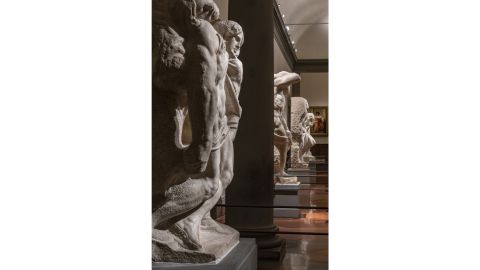
You can now see Michelangelo's chisel marks on his Palestrina Pietà and Prisoners.

The new-look David is part of a wider revamp of the museum, which was Italy’s second most visited in 2019.

The Galleria dei Prigioni, or “prisoners corridor” – named after Michelangelo’s four semi-finished sculptures of prisoners of war, which share the space with two of his other works – has also had its lighting switched up, with several spotlights pointed on each sculpture.

“It used to be that the prisoners looked yellow, and David was white. Now they’re the same color,” Hollberg told CNN.

“You can now see every chisel mark on them.”

The new lighting system, which “restores the right balance of chiaroscuro and color to the works,” is also energy-efficient. Hollberg says the gallery should use around 80% less electricity than in previous years.

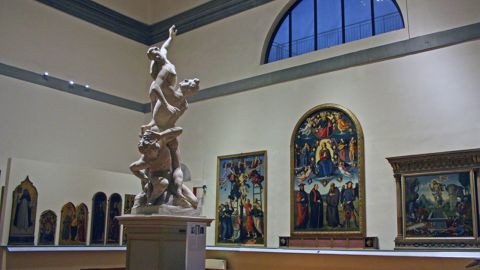
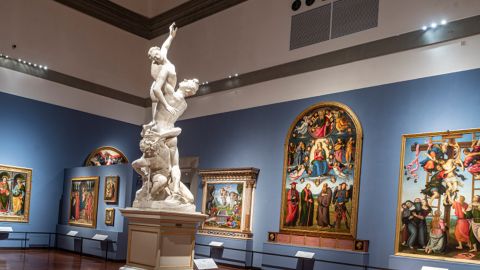
It’s not just the headline works that are looking different. Several of the other rooms of the gallery have had their previously beige walls painted in colors that maximize those in the paintings.

The Sala del Colosso, the gallery’s first room, is now a bright blue, while the 13th and 14th-century rooms are a pale green, chosen to bring out the gold used in most of the paintings.
Courtesy Guido Cozzi

Courtesy Guido Cozzi

Sala Colosso in the Accademia Gallery

And the new lighting everywhere has transformed the paintings from things tourists used to rush past en route to David, to unmissable in their own right.

“One regular visitor said, ‘Where was all this detail? We never saw it,’” Hollberg told CNN. “In one painting by Domenico Ghirlandaio you can now see all the gold dots in the [saints’] halos. Before, the beige walls flattened the gold. In another, it feels like you could pluck the pearls from the painting – before you couldn’t see them at all.

“My job is to give value and visibility to all the works. Every single work here is a masterpiece, but works die on a beige background – they need to be lifted and supported by color. I want to give them what they deserve.”
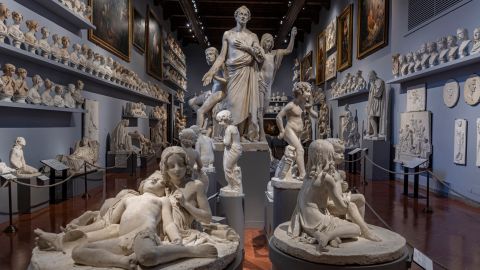
The Gipsoteca renovation has completed the museum revamp.

In the past, the lighting was so bad that some paintings were barely visible – like those beside the David. “Before it was all dark, you couldn’t see them – no one stopped,” said Hollberg. One time she saw a guide shining their phone torch on another painting in a bid to show it to visitors.

Tourists have already changed their behavior, she said.

“Now they stop and look. They’re not all in front of the David like before. I’ve followed groups, and they used to cut through the Sala del Colosso and never stop. Now I see that room full of visitors – it’s redistributing the crowds.”

Lazic, a guide with Elite Italian Experience, agrees: “There are more people stopping in the Sala del Colosso.”

The renovations, which started just before the pandemic and which have been rolled out this year, have finished with the revamp of the Gipsoteca. The plaster cast gallery was another rush-through place. That’s if it was open – with no open windows or air conditioning, it used to close at midday during the summer.

But now with air conditioning, powder blue walls and a new layout for the 414 plaster casts – mostly done by sculptor Lorenzo Bartolini, whose works are found in the Louvre, Amsterdam’s Rijksmuseum and the Metropolitan Museum of Art – it’s a place to linger.

Hollberg says that locals are starting to appreciate the museum, too. “Before it was a space for tourists, but Florentines are rediscovering it. We got the last resisters in with a concert series.”

Dario Franceschini, Italy’s minister of culture, called the reopening of the Gipsoteca “an important step… in bringing [the Accademia] into the 21st century.”

He added: “The works across the entire building have allowed significant innovations in the systems, transforming a museum conceived in the late 19th century into a modern venue without distorting it.”

0

Cappadocia: One of Turkey’s most spectacular hiking destinations


Posted on October 14, 2022 by TripHub.online

221014112431-cappadocia-tz-1-super-tease.jpg

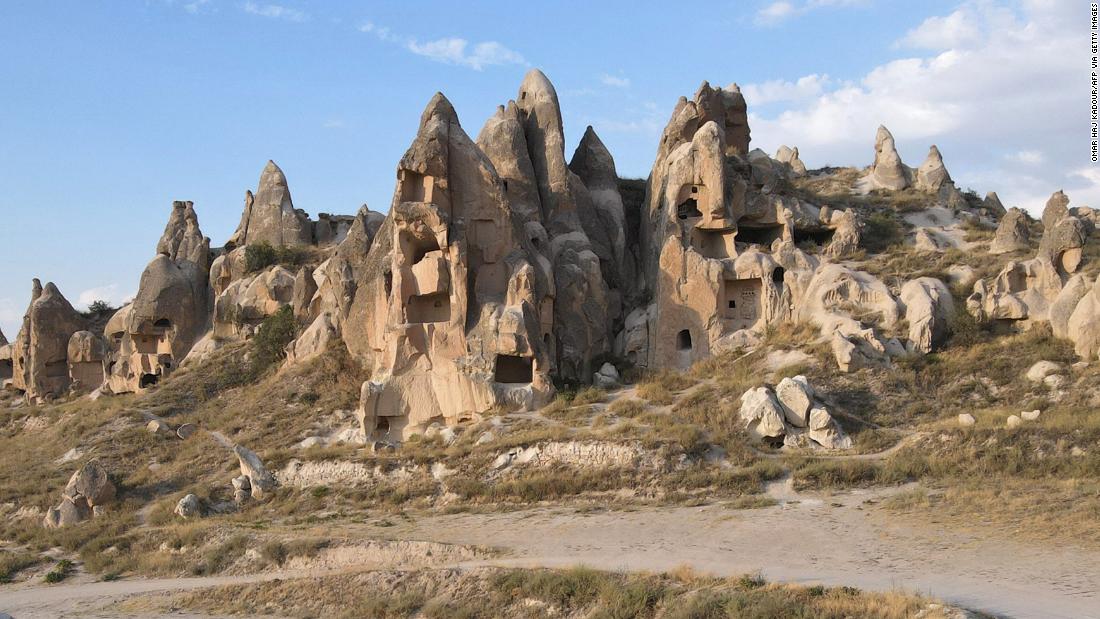
(CNN) — A rich palette of shimmering caramel swirls, ochers, creams and pinks unfolds across the landscape like an enormous handwoven carpet. Stands of poplars line paths carved by ancient lava flows from three now extinct volcanoes, crisscrossing valleys studded with conical peribacı.

This is Cappadocia, central Turkey, famous for its whimsical “fairy chimneys,” to give peribacı their English name.

Cappadocia has an abundance of them, as well as rock churches and monasteries. The region is dotted with former farming communities with dwellings and outbuildings carved out of stone, where ordinary people lived next door to monks.

When the volcanic ash cooled down, it left behind soft porous rock called tufa. Over thousands of years the tufa was eroded and shaped by water and wind.

It’s easy to carve but hardens on exposure to air. Until the 1950s most of the population lived in these surreal rock formations, a tradition dating back centuries.

Now they’re one of Turkey’s most striking tourist attractions, often viewed from the air by the floating legions of hot air balloons that regularly fill the sky.

But, say locals, the real way to appreciate all this is on foot — or hoof. Here are some of the best options for exploring Cappadocia:

Zelve Open Air Museum

Cappadocia is often explored by visitors in hot air balloons, but is just as captivating on food.

Cappadocia is often explored by visitors in hot air balloons, but is just as captivating on food.

YASIN AKGUL/AFP via Getty Images

This archaeological treasure trove offers the chance to experience a typical rural settlement, including a look inside ancient houses, stables, kitchen, churches and monastic chambers carved out of fairy chimneys and rock faces.

Here it’s possible to imagine what Cappadocia’s fairy chimneys looked like when Orthodox Christianity was at its height during the medieval Byzantine period.

“Zelve was permanently occupied from the sixth century to the 20th century, which is something amazing,” says Tolga Uyar, a medieval art historian at nearby Nevşehir Hacı Bektaş Veli University. That’s more than 1,400 hundred years.

Like most of the inhabited caves in Cappadocia, spaces were re-used, re-carved and transformed. Now Zelve is a model of a rock carved civilization preserved from early Christian times through to the modern Turkish Republic.

Clearly marked paths make Zelve easy to get around and give an idea of what you’re likely to come across elsewhere in the valleys.

Ihlara Vadısı

The otherworldly, magical landscape of Cappadocia, Turkey, is home to ancient secrets and enchanting stories.

In summer, much of Cappadocia appears arid and lifeless. The plains on the approach to Ihlara Vadısı seem no different, until you peer over the edge and see the tops of the lush green trees lining the Melendiz River below.

The length of Ihlara Valley stretches along its banks, the location of a pleasant eight-mile hike beginning at Ihlara Village and ending at Selime Manastırı.

In early spring, bush nightingales warble love songs, flowers dance to the “oop oop” call of the ibibik or hoopoe bird, and the burble of water lulls you into a contemplative silence.

Like anywhere in Cappadocia there are centuries-old churches decorated with murals.

There are picnic spots or small restaurants on the banks of the river in Belisırma for lunch.

At the point where the valley opens up, the imposing Selime Monastery, believed to date from the eight or ninth century BCE, comes into view. It’s worth climbing the 300 steps to look inside.

Çavuşin to Kızılçukur

The landscape has been carved by thousands of years of erosion.

The landscape has been carved by thousands of years of erosion.

Omar Haj Kadour/AFP/Getty Images

Several walks start from Çavuşin, a village once home to a mix of Turkish Muslims and Orthodox Christian Greeks known as Rum.

Here, the huge Church of John the Baptist, dating from the fifth century, is the biggest cave church in the region.

Hikers should head up through the village to the cemetery, where a track leads to Kızılçukur. It meanders through orchards filled with apple and apricot trees and skirts fields of grapes, ripening on the vine.

There are several old churches along the way, the most famous being Üzümlü Kilise (Church of the Grapes). At Kızılçukur (Red Valley), the fairy chimneys are pinkish in color by day and take on a beautiful red hue at sunset due to iron ore in the tufa.

It’s possible to follow the track on your own, but many of the churches are either hard to find or locked. Having a Turkish speaking guide that knows who to ask for the key makes for a richer, more rewarding experience.

Guided hikes

It's recommended to go hiking with a guide to get the most from the region.

It’s recommended to go hiking with a guide to get the most from the region.

Omar Haj Kadour/AFP/Getty Images

One such guide is Mehmet Güngör who, since 1998, has run Walking Mehmet in the small town of Göreme where he still lives in a home partly carved out of rock.

He started by chance. “One day I met a couple (of tourists) and we walked with my dog for a few hours,” he says. “At the end they gave me a tip. Then I decided to be a walking guide.”

Güngör’s been sharing knowledge about his favorite places ever since.

Over the last 25 years he’s seen locals move from farming to tourism. Cleansed of agricultural additives, the landscape has transformed with the reappearance of species of flora and fauna long thought to have vanished.

In spring, rare iris galatica bloom. The dark blue or purple petals of these flowers, highlighted with pops of yellow, spring from narrow crevices. Güngör knows where to find them, along with wild asparagus, orchids and thyme.

On your own, if you’re lucky, you might spot a tortoise hiding under a bush or an eagle hovering in the sky. With Güngör, hikers “will see churches and monasteries from the fifth, sixth and seventh centuries they won’t be able to find on their own.”

He also does full moon night walks, hikes that give the best light for photographing the valleys, or ones suitable for hot days.

Güngör loves what he does because guiding tourists through the valleys is more than a job, he says.

“Cappadocia is like no other place. It’s full of positive energy. While walking I become one with nature.”

Horse tours

People have lived in caves in Cappadocia for centuries.

People have lived in caves in Cappadocia for centuries.

Omar Haj Kadour/AFP/Getty Images

For those that don’t want to walk, there are horse tours. Cappadocia has long been referred to as the “land of wild horses” after free-roaming animals known as yılkı.

Prior to the mechanization of agriculture, working horses on farms were turned loose in winter when the harvest was over, to roam at will. In spring, they’d be rounded up and put to work again, but once tractors replaced them permanently, they were left to fend for themselves.

The horses at Cemal Ranch are anything but wild and are well-looked after all year round.

Cemal Koksal, born and raised in the nearby town of Ortahisar, is passionate about the business he established 15 years ago with his brother and horse-breeding father.

“The peace and naturalness of horse riding in such a unique and fascinating landscape on my favorite horse helps to keep me close to nature and close to my family roots of breeding and working with horses,” he says.

Cemal Ranch runs different small group tours (maximum 14 people) suitable for beginners, even children, right through to more experienced riders. Everyone gets a short training session before any tour and helmets are obligatory.

Participants on longer tours get to sample food cooked by Koksal’s mom.

It’s the only horse trekking outfit with sunset access to Cappadocia’s Rose and Red valleys. “Looking down on all the stunning valleys as they change colors in the sunset light is magical.”

He adds: “I am the happiest on a horse and happiest riding in the beautiful valleys of Cappadocia. It’s the ultimate freedom and peacefulness”.


0

Santu Lussurgiu, the Sardinian town with an alcoholic secret


Posted on October 14, 2022 by TripHub.online

221012162421-05b-sardinia-spirit-filu-e-ferru-super-tease.jpg

(CNN) — It’s super strong, fennel-flavored, as transparent as water — and in many households across Sardinia it’s still produced illegally.

Filu ‘e ferru, or “iron wire,” is an old drink with a dangerous past and an alcohol concentration of up to 45% that knocks out even those with a high tolerance.

Rosa Maria Scrugli was barely 23 years old when in 1970 she was sent on a work mission to the small town of Santu Lussurgiu, set in the wild Oristano area of western Sardinia amid rocky hills and caves.

For 400 years, this place of barely 2,000 residents has been making a potent filu ‘e ferru locally dubbed “abbardente” — a word deriving from Latin which fittingly means “burning water.”

The mayor — the town’s cobbler — greeted Scrugli at noon with several welcoming shots, but by the time she’d downed the second, she nearly collapsed, falling on top of the mayor who was only a bit tipsy.

“The next thing I knew, someone had dragged me away and I woke up in my hotel room with the worst hangover ever. The mayor also wasn’t feeling too well, but he was used to drinking filu ‘e ferru. It was my first time, and it was a shock,” Scrugli tells CNN.

Santu Lussurgiu is considered the cradle of the oldest Sardinian tradition of “acquavite” — literally “vine water” in Italian, and indicating a premium alcohol distillate.

A secret code

The villagers have brewed filu 'e ferru for 400 years.

The villagers have brewed filu ‘e ferru for 400 years.

Distillerie Lussurgesi

“Acquavite and abbardente are just synonyms for filu ‘e ferru, which is a metaphor, part of a secret code invented at a later stage to refer to acquavite in order to escape police controls,” says Santu Lussurgiu’s only (legal) distiller Carlo Psiche.

It became an “outlaw” drink in the 19th century when Italy’s royal house of Savoy introduced levies on alcohol production, kick-starting an illegal trade that in Santu Lussurgiu continues on a mass scale.

Up until a few decades ago police raids were frequent, farmers had to hide bottles of their filu ‘e ferru either in some secret place at home or underground in their garden, marking the spot with a piece of iron. Hence the name “iron wire.”

In coming up with such a nickname, locals might have also been inspired by the nearby rocky mountain range of volcanic origin called Montiferru — the “iron hill.”

What has always made Santu Lussurgiu’s acquavite exceptional, as opposed to those produced in the rest of Sardinia, is that it is distilled from wine, not marc, a spirit made from the residue of the skins and seeds of grapes after the wine has been extracted. It is therefore not a grappa — Italy’s favorite post-meal shot.

Psiche claims his Distillerie Lussurgesi, featuring alembic copper stills used for old-style distillation processes, is the only one among the five filu ‘e ferru distilleries in the wider region to use real wine instead of marc, or “vinacce.”

Meanwhile, families in the village have been brewing filu ‘e ferru at home since the late 16th century, after monks from the local abbey introduced this potent alcoholic distillate in the area.

“At first it was used for its medical and therapeutic properties, particularly for toothache, then people realized it was great as booze, too,” says Psiche.

Police raids and secret signals

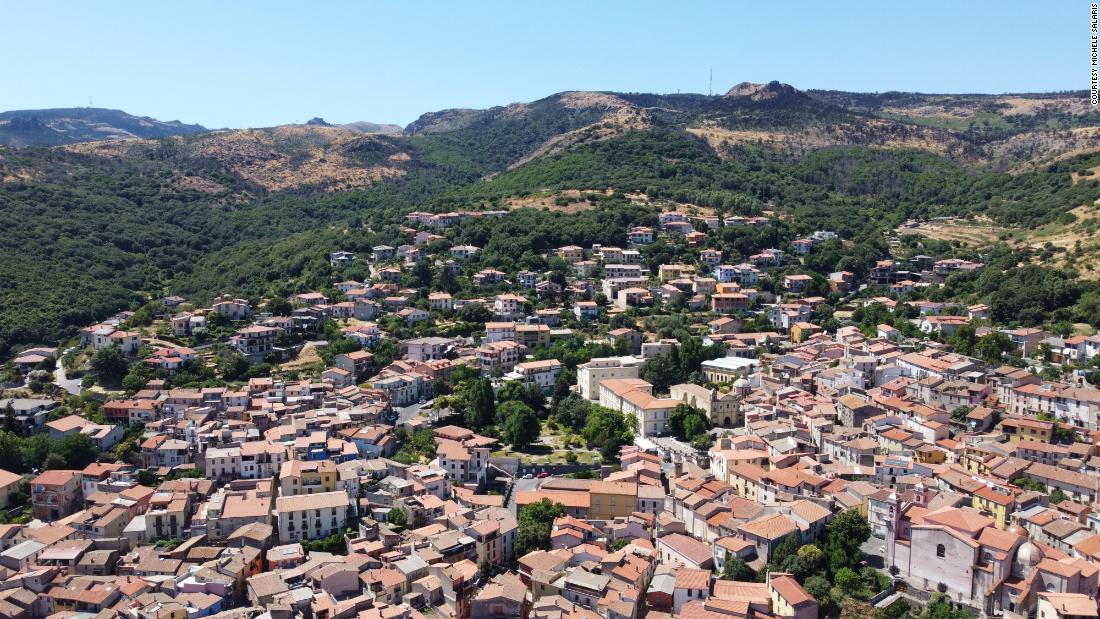
Santu Lussurgiu is in the hills in the west of Sardinia.

Santu Lussurgiu is in the hills in the west of Sardinia.

Courtesy Michele Salaris

Everyone in the village still secretly makes abbardente at home. None of them pay taxes on it, except for Psiche, who runs a business.

Nowadays things are less risky than in the past. After all, many Italians brew wine and all sorts of liqueurs at home, and authorities no longer go knocking on people’s doors unless they’ve set up a large-scale business.

Psiche recalls that up until the 1960s, when tax police patrolled the village in search of clandestine producers, people would hurry to hide their bottles and alembics, shouting to each other the emergency code “filu ‘e ferru.” It was like a curfew signal.

“I was just a kid, but I remember the elders describing the policemen parking their cars in front of the town hall and wandering around hunting like hounds for illegal producers.”

Fennel seeds are added to filu ‘e ferru to soften the pungent flavor, and given its intense scent, the smell of fennel oozing out from homes occasionally helped the police track down illegal activity.

“There used to be a village messenger whose job was to announce local laws, events and measures by trumpet. When the abbardente raids occurred he’d use another key to warn people,” says Psiche.

Italians and foreigners who knew of the secret filu ‘e ferru would flock to Santu Lussurgiu to buy entire flasks of it, says Psiche, but they asked too many questions with the risk of exposing producers. So eventually locals decided to go completely underground.

The village had some 40 distilleries by the end of the 1800s, when filu ‘e ferru had become a popular drink and was exported across Italy. However, the distilleries were shut in the early 20th century and production became solely “domestic.”

Psiche, a former mechanic, decided to recover the old village tradition of acquavite 20 years ago. His abbardente, made with fresh local white grapes, comes in two versions, both aged for at least 12 months.

The clear-as-water abbardente has an intense enveloping taste with a slight dried fruit and almonds flavor, and is diluted with water from a nearby village source. It is aged in steel tanks.

The amber colored abbardente is instead aged in oak barrels. The wood maturation gives it a sweetish flavor reminiscent of honey and homemade bread.

A female affair

Psiche uses traditional copper stills in his distillery.

Psiche uses traditional copper stills in his distillery.

Distillerie Lussurgesi

Psiche’s artisan distillery features old distillation objects and an original acquavite bottle from 1860. He has several American clients in Ohio and Chicago, where many villagers migrated.

“Our village has always used wine instead of marc because the vineyards over here tend to over-yield so the best way to avoid any waste was to use the wine to make abbardente,” says Psiche.

While men tended to the fields, filu ‘e ferru production in Sardinia was a women’s business. Wives, daughters and grandmas became experts in distillation. At first, huge pots of copper, traditionally for milk, were used and sealed with flour dough to heat the wine. Later, the ladies turned to copper stills.

Sardinians have a love affair with their “hot water,” just as Neapolitans do with coffee.

Even though it is great as an after-dinner digestif, whenever it’s toasting time a shot of abbardente works fine.

According to Psiche, it’s also a drink with which to observe death: when someone dies it is customary to savor a glass of filu ‘e ferru during the midnight wake to honor the deceased.

Filu ‘e ferru is as fiery as the Sardinians who keep making it at home, just like their ancestors, sticking to tradition. They believe it can be drunk just like pure water.

One woman from Santu Lussurgiu, who spoke to CNN on condition of anonymity over fear of being busted by authorities, says it’s not just for special occasions: “Those who like it drink it at any time of the day, even at breakfast.”

Making filu ‘e ferru strictly for personal consumption, she uses a huge alembic belonging to her grandparents that has been in the family since the 1960s.

“It takes me half a day to distil the wine, which grows on our land. Other than fennel, I often add absinthe,” she said.

The woman says she has now also involved her son in the daily preparation of their homemade filu ‘e ferru — perhaps a sign of changing times that men like Psiche should play a key role in preserving the alcoholic heritage.

Sign up to CNN Travel’s free nine-part Unlocking Italy newsletter for insider intel on Italy’s best loved destinations and lesser-known regions to plan your ultimate trip. Plus, we’ll get you in the mood before you go with movie suggestions, reading lists and recipes from Stanley Tucci.

0